
Last updated October 15, 2026
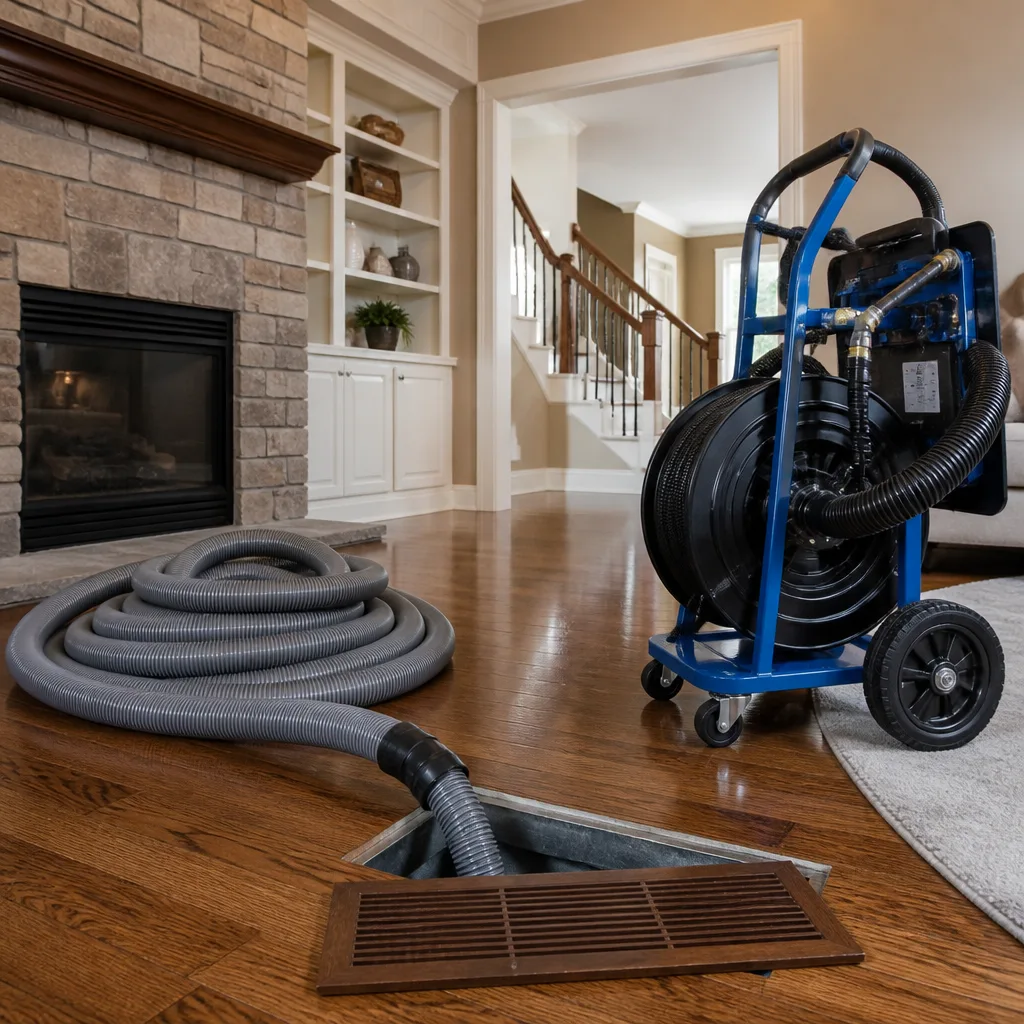 Whole-home duct cleaning
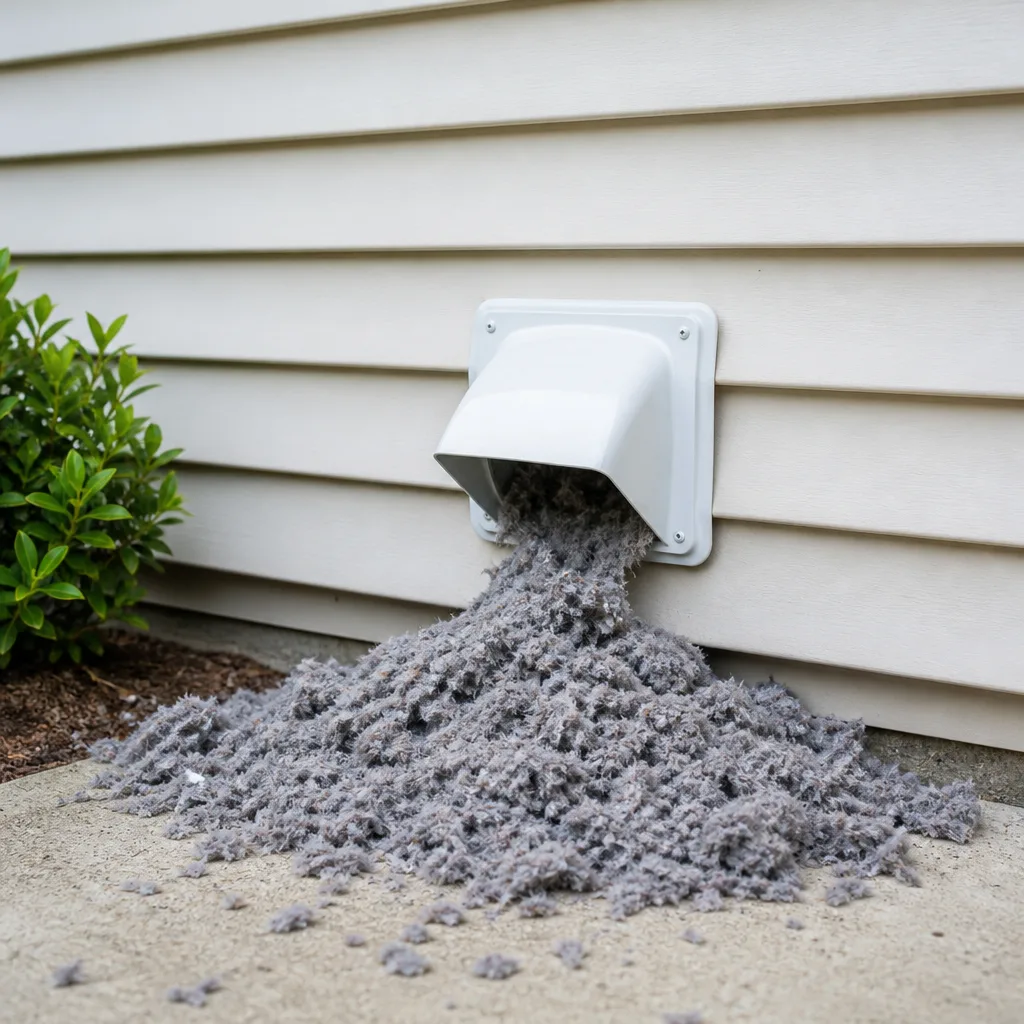 Dryer vent cleaning
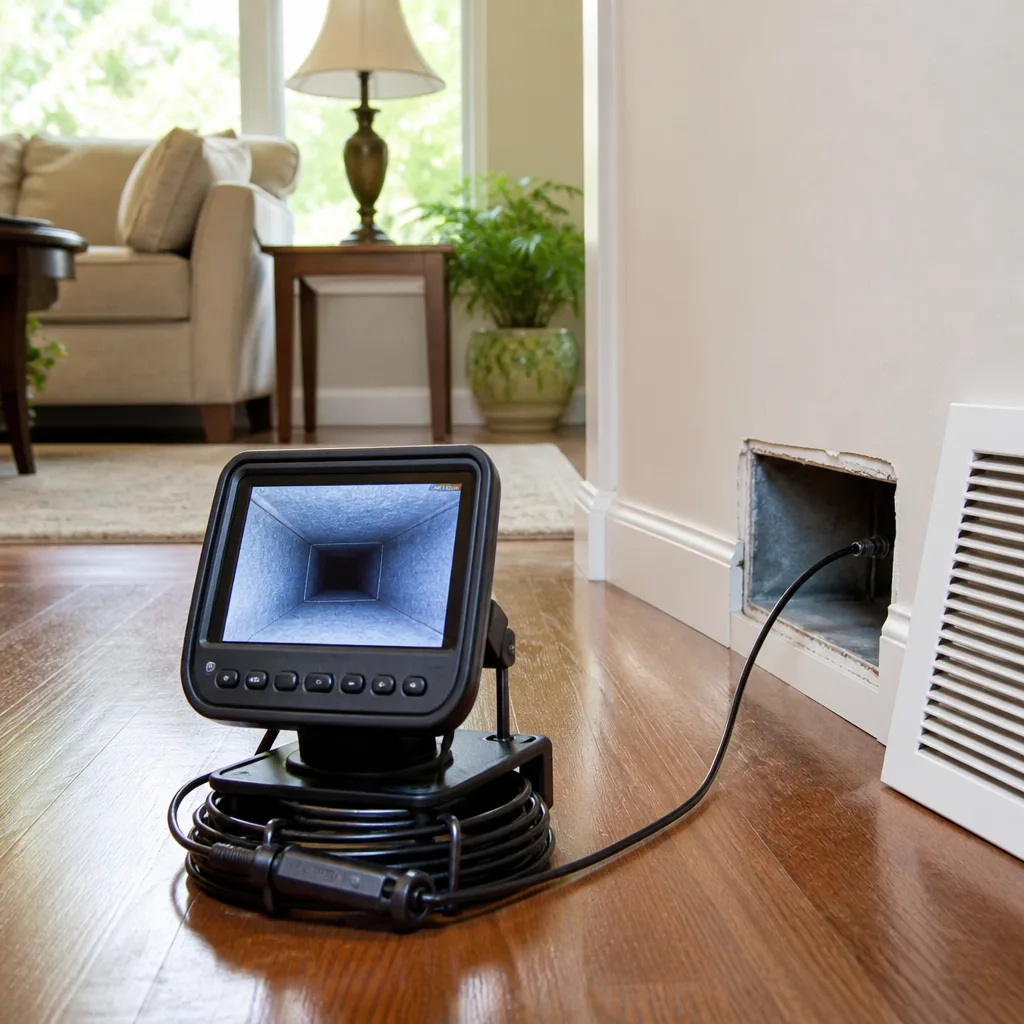 Camera inspection
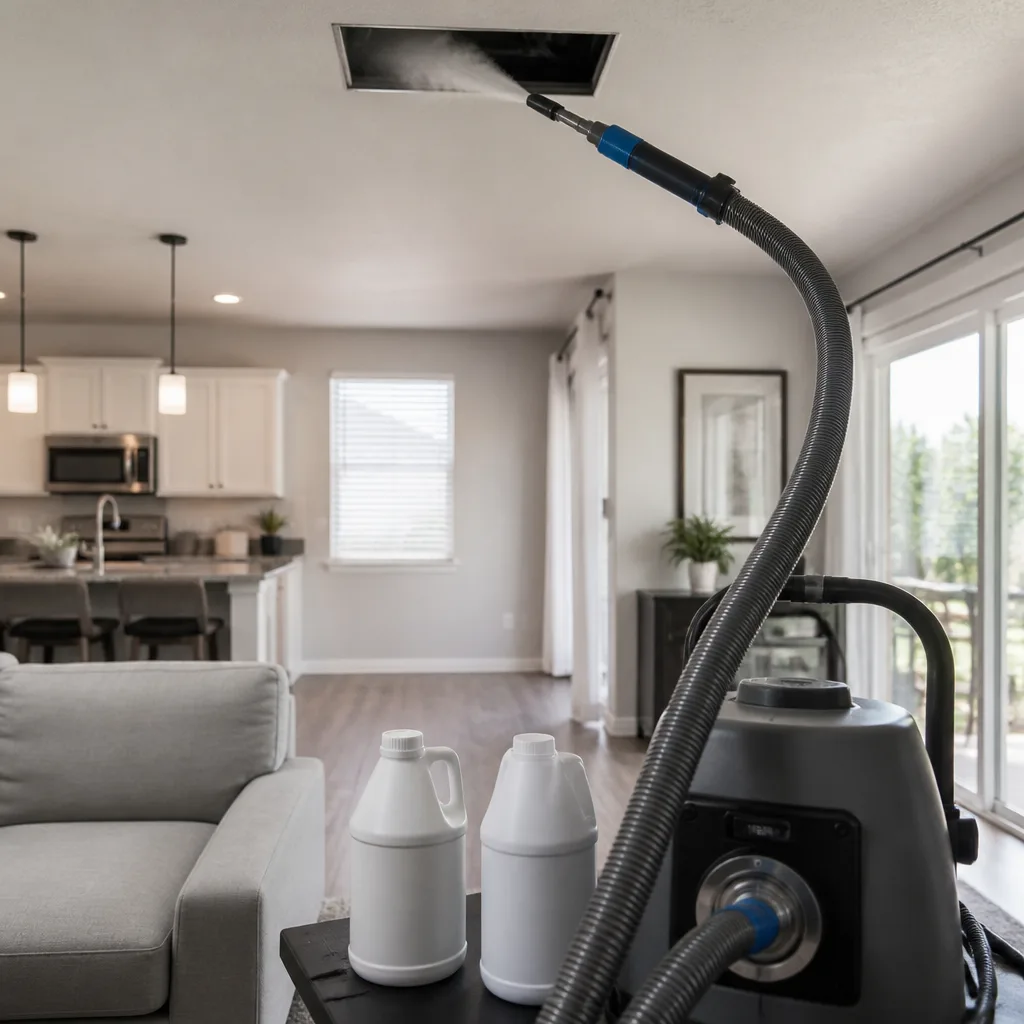 Sanitizing & deodorizing
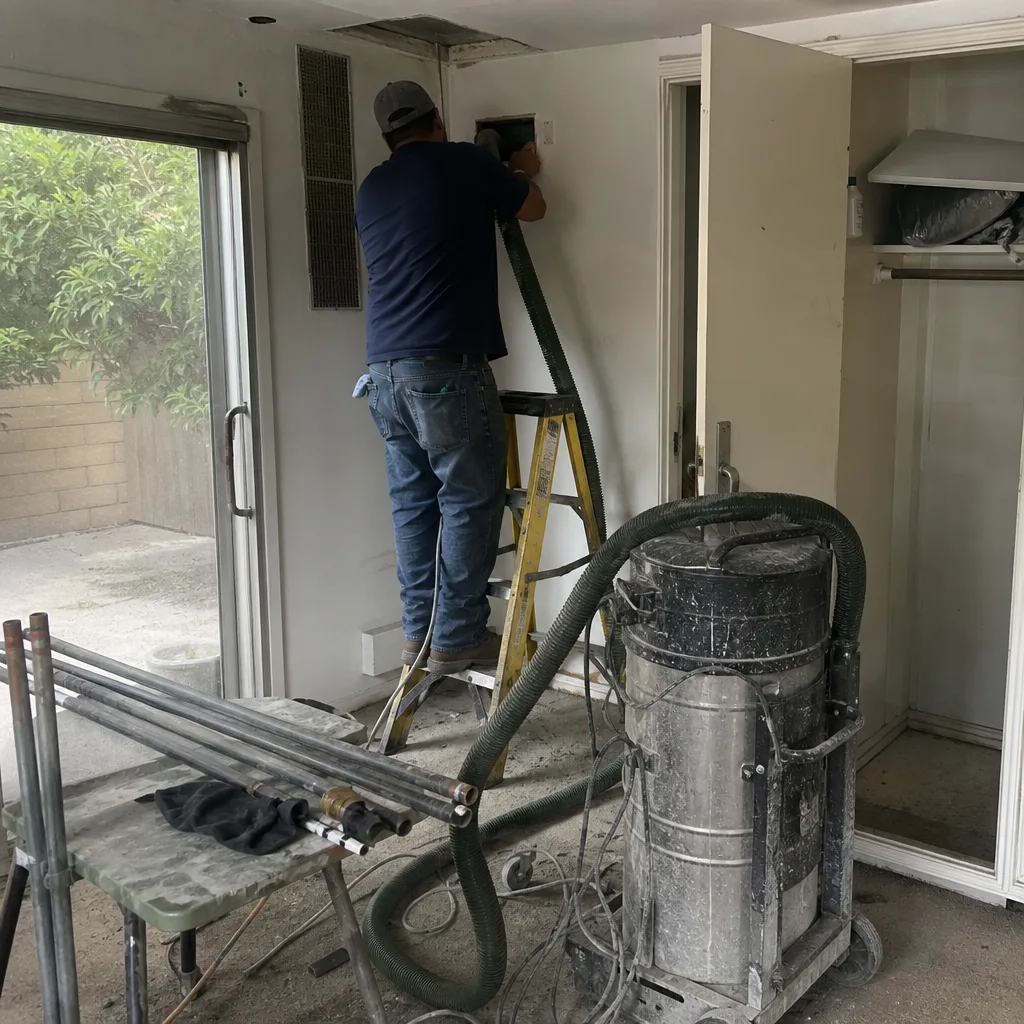
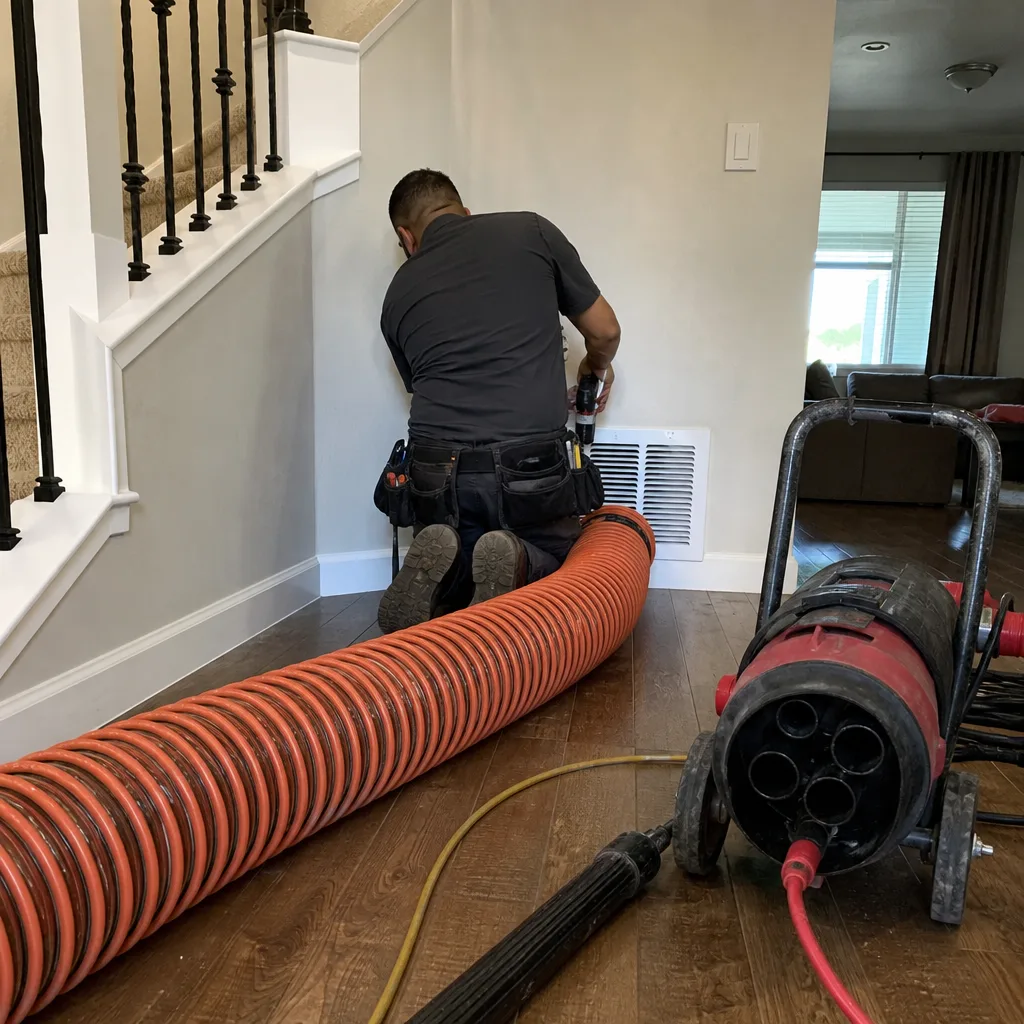
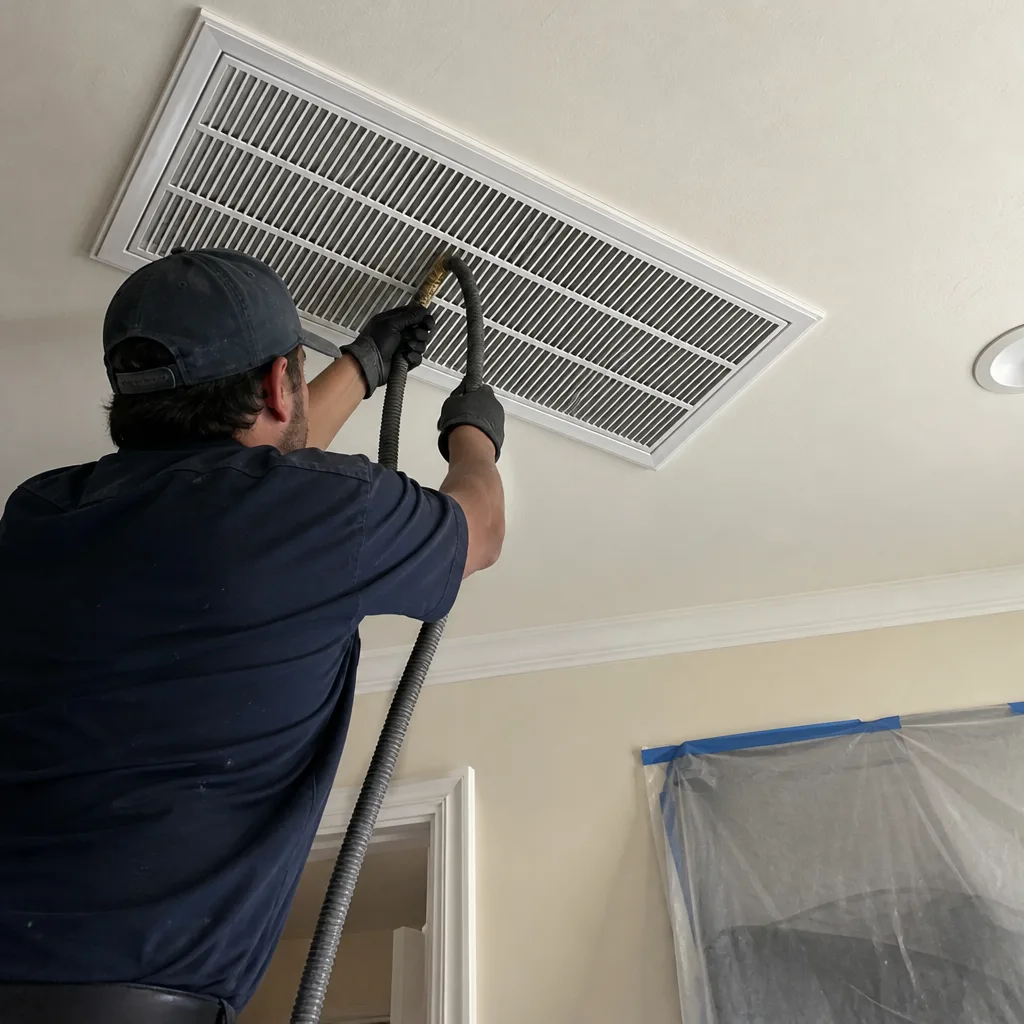
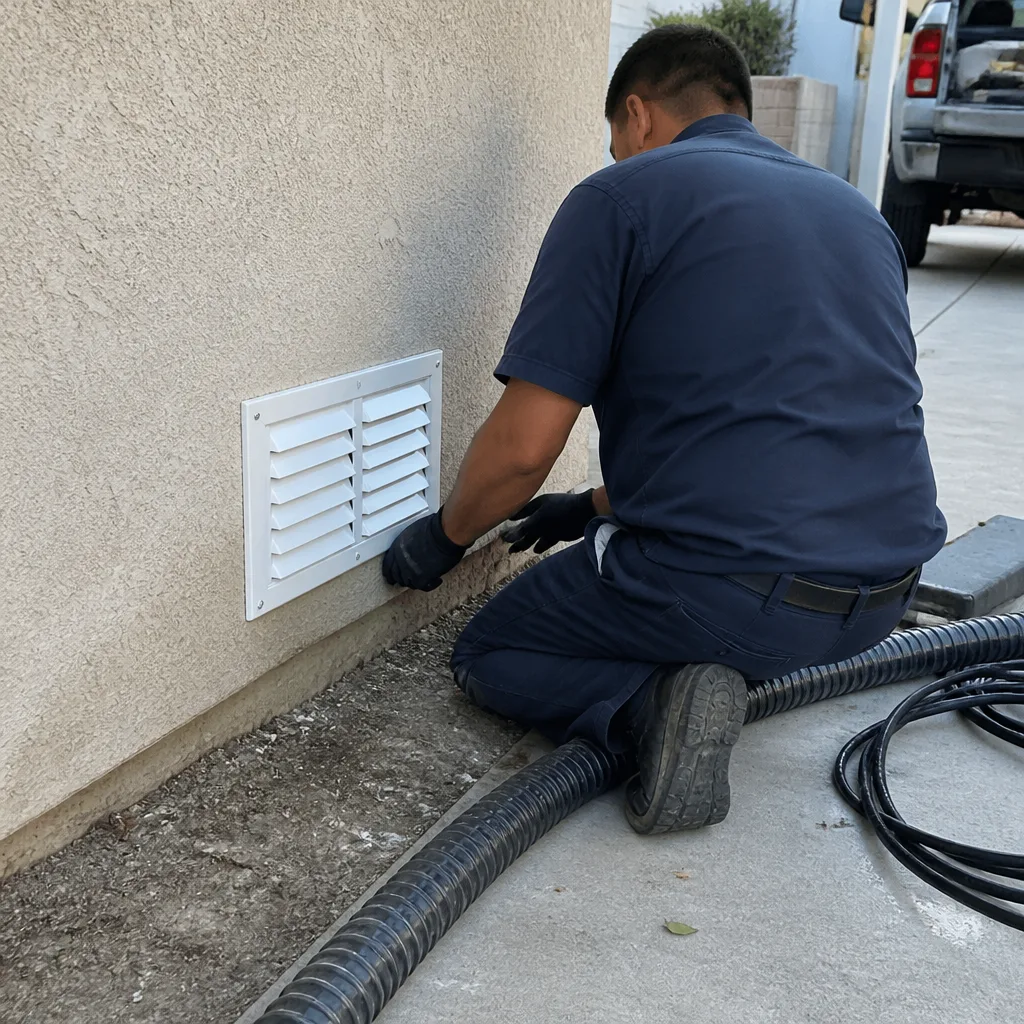
Whole-system duct and dryer vent check with before-and-after photos - you see exactly what came out of your vents
That "$99 whole-house special" is a bait ad - the real number appears once they are in your hallway, or the "clean" is a shop-vac at the register. We photograph the inside of your ducts before and after instead.
Air Duct Cleaning Permits, Codes & Inspections in CA: What You Need to Know
Most homeowners are shocked to learn that a routine air duct cleaning in Woodland Hills can cross an invisible legal line. Brush a duct, vacuum it out, seal an access panel, and you’re doing maintenance. Cut into a plenum box, replace a flex duct section, or install an in-duct UV light, and California code now classifies the work as mechanical alteration. That distinction determines whether you need a permit, and most companies won’t volunteer the information. This guide draws the exact line between cleaning and mechanical work, explains what Title 24 and LA County actually require, and shows you what to ask before and after anyone touches your ducts. For a deeper look at when to schedule service, see our Air Duct Cleaning Warning Signs: A Woodland Hills Homeowner’s Reference Guide.
Styles & brands we work with
Quick Answer
Air duct cleaning itself does not require a permit in California. However, the moment a contractor modifies, replaces, or alters any part of your duct system, Title 24 and the California Mechanical Code kick in, and a permit from LA County Building & Safety is typically required. Ask for a written scope of work before anything starts, and confirm in writing whether any modification was performed.
Table of Contents
- Cleaning vs. Mechanical Work: Where California Draws the Permit Line
- Title 24 and the California Mechanical Code: What Actually Applies to Ductwork
- LA County Amendments and the Inspection Process for Duct Alterations
- Why Duct Sealing with Aeroseal or Mastic Changes the Compliance Picture
- What Homeowners Should Ask to See After Any Work Beyond Brushing
- The Insurance and Resale Implications of Unpermitted Duct Modifications
- Woodland Hills Specifics: Climate, Construction Era, and Code Reality
- Common Mistakes to Avoid
- When to Call a Professional
- Frequently Asked Questions
- The Bottom Line
Cleaning vs. Mechanical Work: Where California Draws the Permit Line
California law distinguishes clearly between “maintenance” and “alteration,” and that distinction is the entire ballgame for air duct work. Brushing duct interiors, running a HEPA collection vacuum through the system, and wiping down accessible register faces fall under routine maintenance. No permit, no inspection, no county involvement. But the moment a technician cuts sheet metal, removes a duct section, installs new flex duct, relocates a register, or modifies a plenum box, the work becomes an alteration under the California Mechanical Code. Alterations require permits, full stop. Most homeowners don’t realize this because the work looks cosmetic from the outside. The duct cleaner sweeps the interior, notices a crushed flex section in the attic, and offers to swap it out for a few hundred dollars. That swap is mechanical work that should have triggered a permit application with LA County Building & Safety. In our experience across Woodland Hills, Warner Center, and Winnetka, fewer than one in ten homeowners knows this line exists before a contractor crosses it.
The practical test we recommend: ask the technician before any work begins whether the job includes any cutting, replacement, or modification beyond brushing and vacuuming. If the answer is anything other than “no, it’s cleaning only,” ask for a written scope of work identifying the modification and the permit number. A legitimate contractor will have no trouble providing this. A contractor who gets vague is either unlicensed, unfamiliar with the code, or planning to do unpermitted work in your attic.
Specific examples of work that requires a permit in California:
- Replacing a damaged flex duct run longer than a simple reconnection
- Cutting a new access hole in a plenum box for cleaning or inspection
- Installing an in-duct UV germicidal lamp, air purifier, or hydronic coil
- Adding a new supply or return register that requires duct extension
- Rerouting ductwork to accommodate a remodel or addition
- Replacing an entire duct trunk line or a failed zoning damper
Examples of work that does not require a permit:
- Rotary brush cleaning of existing duct interiors
- Negative-pressure HEPA vacuum extraction of debris
- Washing accessible register faces and grilles
- Replacing a dirty disposable air filter with a new one
- Reattaching a loose flex duct connection that has not been cut or altered
The line is not always obvious, which is exactly why homeowners should ask before booking Air Duct Cleaning services. In Woodland Hills, where many homes date from the 1960s and 1970s, original sheet metal ductwork is common and aging flex connectors fail regularly. The temptation to quietly “fix” a collapsed duct during a cleaning visit is real, and so is the liability.
Title 24 and the California Mechanical Code: What Actually Applies to Ductwork
Title 24 of the California Code of Regulations is the umbrella for building standards in the state, and it includes the California Mechanical Code (CMC). The CMC incorporates the International Mechanical Code with California-specific amendments, and it governs the installation, alteration, and repair of mechanical systems, including HVAC ductwork. Section 106 of the CMC states that it is unlawful to construct, enlarge, alter, repair, or remove any mechanical system without first obtaining a permit from the authority having jurisdiction. In Los Angeles County, that authority is LA County Building & Safety, although many incorporated cities handle their own permitting. Woodland Hills sits within the City of Los Angeles, so the Los Angeles Department of Building and Safety (LADBS) is the enforcing agency for homes in the 91364, 91367, and 91303 zip codes.
The key language for our purpose is the phrase “alter, repair, or remove.” A strict reading includes removing a section of duct and replacing it, even if the replacement is identical in size. The CMC does not carve out a “minor repair” exception for ductwork in single-family homes, though some inspectors exercise field discretion for trivial reconnections. That discretion is not a legal protection. If the work fails, causes a fire, or damages property, the absence of a permit becomes a problem for the homeowner, not the inspector who chose not to enforce.
Title 24 also imposes energy efficiency requirements on any newly installed or replaced ductwork. Section 150.0 of the California Energy Code requires that new or replaced ducts be sealed and tested for leakage when a permit is pulled. The standard allows no more than 6% leakage for new ducts in most climate zones. Woodland Hills sits in climate zone 9, which falls under the inland valley cooling-dominant requirements. Any permitted duct replacement in Woodland Hills must meet those sealing and testing standards, which is why legitimate duct replacement work costs more than a cash handshake to a technician with a roll of foil tape.
For homeowners, the takeaway is simple: if the work is just cleaning, Title 24 mostly leaves you alone. If the work is alteration or replacement, Title 24 brings energy testing, permit inspections, and documentation requirements with it. The law doesn’t care whether you knew; it cares whether the work was done.
LA County Amendments and the Inspection Process for Duct Alterations
Los Angeles County and the City of Los Angeles layer local amendments on top of the state mechanical code, and a few of them bear directly on ductwork. LADBS requires permits for any mechanical alteration with a value exceeding $500 in labor and materials, which effectively covers almost every duct replacement job. LADBS also enforces the city’s building energy code, which adopts Title 24 energy standards with minor local refinements. For Woodland Hills homeowners, the practical effect is that unpermitted duct alteration is not just a state code issue. It is a local code issue that can surface during a building department records review when you sell the house or file a claim.
If you do pull a permit for duct alteration, here is what the process actually looks like:
- Permit application. Your contractor files an application with LADBS, typically online through their e-permit system for simple mechanical work. The application includes a scope of work, equipment specifications, and in some cases a simple drawing.
- Plan check. Simple mechanical alterations are often eligible for over-the-counter review without a full plan check. More complex jobs, like adding a new return air system or rerouting trunk lines, may require a full plan check. The reviewer confirms compliance with the CMC and Title 24 energy requirements.
- Permit issuance. Once approved, LADBS issues the permit and collects the fee. Fees range from roughly $100 to $400 for typical single-family duct alteration work, depending on the valuation.
- Work performed. The contractor does the work under the permit. The permit must be posted or available on site.
- Inspection. LADBS sends an inspector to verify the installation. For duct work, the inspector checks support, sealing, insulation, and connections. For permitted new or replacement ducts, the inspector may also require a duct leakage test result (HERS rater or self-test with approved equipment).
- Final sign-off. Once the inspection passes, the permit is finalized and the work is recorded as legal. You keep the signed permit card for your records.
In our experience, the single biggest delay in Woodland Hills is not the plan check. It is the leakage test. Older homes with original duct systems rarely pass a 6% leakage standard without significant sealing work, which adds time and cost to any permitted replacement job. Homeowners who are only getting their ducts cleaned avoid all of this, which is precisely why some contractors offer “cleaning plus a small repair” without mentioning that the repair is the part that requires the permit.
For a full picture of what professional air duct cleaning covers without touching the mechanical side, see our Air Duct Cleaning in Woodland Hills service page.
Why Duct Sealing with Aeroseal or Mastic Changes the Compliance Picture
Duct sealing is the gray-area upsell that most homeowners don’t see coming. You book a cleaning. The technician finishes brushing and vacuuming. Then the pitch: “You have some leakage. We can seal it from the inside with Aeroseal for a few thousand.” Or the cheaper version: “We’ll brush mastic on the accessible joints.” In both cases, the work has crossed from maintenance into alteration territory.
Aeroseal is a fog-based sealing product injected into the duct system under pressure. It fills small gaps and pinhole leaks from the inside. Under California code, applying Aeroseal to existing ductwork is a repair or sealing activity that generally does not require a permit in and of itself, but it does create compliance questions. If the Aeroseal is applied because the ducts leak beyond the Title 24 threshold, any future permitted work on that duct system will require the system to be tested and documented. A homeowner who seals with Aeroseal but never tests has no paperwork to prove the system meets the standard. A buyer or insurer may ask for that paperwork and find nothing.
Mastic sealing at accessible joints is similar. Sealing an accessible duct joint with mastic is arguably maintenance if the joint was already accessible and no material was altered. But if the technician opens a wall cavity, cuts an access panel, or disconnects duct sections to reach the joint, the work becomes alteration. The distinction matters because mastic sealing that is improperly applied can trap condensation, damage insulation, or create code violations that a future inspector will flag.
The clean answer: if a contractor proposes any duct sealing during a cleaning visit, ask whether the work will be tested and whether any permit is required. At Cardinal Air Duct Woodland Hills, we quote cleaning work separately from any sealing recommendation, following the principles outlined in The Complete Guide to Air Duct Cleaning in Woodland Hills. We do not bundle sealing into a cleaning visit without a written scope and a clear explanation of what is and isn’t code-compliant. The last thing a Woodland Hills homeowner wants is a hidden mechanical alteration wrapped in a maintenance invoice.
What Homeowners Should Ask to See After Any Work Beyond Brushing
If any work was performed beyond brushing and vacuuming, you should leave the appointment with documentation. Not verbal assurances. Not a text message. Documents. Here is the checklist every homeowner should use after a duct cleaning that drifted into modification:
- A written scope of work. This states what was done, where, and with what materials. If the technician replaced a flex duct section, the scope should identify the location and the product used.
- A permit number, if applicable. If the scope includes alteration or replacement work, ask for the LADBS permit number. No permit number means the work was unpermitted, which is a problem you inherited the moment you paid the invoice.
- Before-and-after photo proof. This is not just about marketing. Photos of the duct interior before and after the work show what was actually touched. The Relay Standard at Cardinal Air Duct Woodland Hills includes photo documentation on every job for exactly this reason. You should see the interior of your own ducts before you sign off on the invoice.
- A written guarantee. Any repair or replacement should carry a warranty in writing. Our 365-Day Done Right Promise applies to every job without exception: if the work isn’t right within a full year, we return and correct it at no charge. If your contractor can’t put that in writing, you don’t have a guarantee.
- Any energy test results. If the work involved new or replaced duct sections under a permit, you should receive the duct leakage test results and a copy of the signed inspection card. This is your proof that the work was done to code.
We’ve seen homeowners in Woodland Hills with unpermitted duct modifications that they paid for years ago and only discovered when a buyer’s inspection flagged the work. In several cases, the seller had no scope of work, no permit, no photos, and no way to prove what was done. The sale stalled while the seller scrambled to retroactively permit the work, and in one case the buyer walked. Documentation is not paperwork for its own sake. It is the difference between a clean resale and a closing that collapses.
The Insurance and Resale Implications of Unpermitted Duct Modifications
Unpermitted duct work is not a victimless code violation. It becomes a financial problem the moment your insurer or a buyer looks closely. Homeowner’s insurance policies typically exclude coverage for damage caused by faulty workmanship or code violations, and unpermitted mechanical alterations are often classified as both. If an unpermitted duct modification causes a fire, a water leak, or a mold issue, the insurer may deny the claim on the grounds that the work was illegal and the homeowner is responsible for the resulting damage. We have seen this play out in the San Fernando Valley, and the homeowner rarely wins.
Resale is the other exposure. During escrow, the buyer’s home inspector walks the attic and the crawlspace. A professional inspector can spot recent duct work by the look of the flex connectors, the condition of the tape, and the presence of a permit sticker or its absence. If the inspector flags the work and the seller cannot produce a permit, the buyer has leverage. The standard responses: the buyer demands a price reduction, the buyer demands retroactive permitting paid by the seller, or the buyer walks. None of these are good outcomes for the seller.
Retroactive permitting in the City of Los Angeles is possible, a process LADBS calls “as-built” permitting. But it is slow, invasive, and expensive. The inspector may require opening finished surfaces to verify the installation, which means drywall repair and paint. If the work does not meet current code, the inspector may require correction before sign-off. A $400 cash repair becomes a $4,000 legal remediation. All of this is avoidable if the work is permitted in the first place.
The smarter path is to insist on documentation at the time of the work. If your duct cleaning stays on the maintenance side of the line, you need no permit and no inspection. If it crosses into alteration, the permit is not a luxury. It is the only thing standing between you and a title report problem.
Woodland Hills Specifics: Climate, Construction Era, and Code Reality
Woodland Hills has a specific set of conditions that make duct code compliance unusually important. The community sits at the western edge of the San Fernando Valley, where summer temperatures routinely cross 100 degrees. Cooling is not optional, and the duct system carries conditioned air through attics that reach 130 degrees or more on peak days. Air leakage in a Woodland Hills duct system is not just an efficiency issue. It is a comfort and cost issue that shows up directly in your summer electric bill. A duct system leaking 20% of its conditioned air into a hot attic is paying LADWP to cool the roof.
The housing stock compounds the problem. Large portions of Woodland Hills were developed between the 1950s and 1980s, and many homes still run original sheet metal ducts with aged flex connectors at the boot connections. Those connectors deteriorate with heat, age, and vibration. By the time a homeowner notices weak airflow in a back bedroom or a musty smell from the registers, the duct system has often been leaking for years. The temptation during a cleaning visit is to fix those connectors while the technician is in the attic. That fix is controlled work. Unpermitted, it violates the CMC. Permitted, it triggers sealing, testing, and inspection. Most homeowners never hear this distinction because no one tells them.
Neighborhoods like Walnut Acres, Vista de Oro, and the areas south of Ventura Boulevard have a mix of original mid-century duct work and newer systems from remodels and additions. The remodels are where unpermitted work hides. A previous owner runs a new flex duct to a converted garage, doesn’t pull a permit, and sells the house. The buyer inherits the liability. We’ve walked attics in Woodland Hills where the duct work was a mix of legal original runs and clearly unpermitted additions, and the homeowner had no idea until we pointed it out.
The practical guidance for Woodland Hills: if you are getting your ducts cleaned, which you should do periodically to remove dust and debris, make sure the scope stays on the cleaning side unless you are prepared to pull permits for any modification. For more on what a proper cleaning includes, visit our Cardinal Air Duct Woodland Hills home page or the HVAC Cleaning in Woodland Hills service page. Both cover what the Rotobrush and Nikro equipment actually do and what you should expect from a professional visit.
Common Mistakes to Avoid
- Assuming all duct work is the same. Cleaning is maintenance. Replacement is alteration. Missing this distinction is the root cause of every other mistake on this list.
- Letting a technician replace a duct section without asking about a permit. The technician knows the work requires a permit. If they don’t mention it, they are either unlicensed, uninformed, or hoping you won’t ask.
- Paying for unpermitted work and discovering it during a sale. This is the most expensive mistake in the Valley. The repair cost is trivial compared to the escrow delay, the price reduction, or the buyer walking.
- Assuming your insurer covers damage from unpermitted work. Most policies exclude faulty workmanship and code violations. Unpermitted duct work often falls into both categories.
- Confusing duct cleaning with duct sealing. Brushing and vacuuming are maintenance. Injecting Aeroseal or applying mastic is repair. Ask before the work starts whether sealing is part of the job.
- Not getting a written scope of work. Verbal agreements disappear the moment there’s a problem. The written scope is your only proof of what was done and what was promised.
- Skipping before-and-after photos. You should see the interior of your own ducts before you pay the invoice. Any professional company should provide this as standard practice.
When to Call a Professional
You should call a professional when the work involves anything beyond the accessible surfaces of your register faces. If you suspect crushed flex ducts, separated connections, excessive leakage, or you want a documented assessment of your duct system’s condition, the work belongs in the hands of someone who can show you the interior with photos, explain what is maintenance and what is alteration, and give you a written scope before any work begins. If a previous owner left you with unpermitted duct modification, the same call applies. We will tell you what we see, what the code implications are, and what your options look like before a buyer’s inspector finds it first. Cardinal Air Duct Woodland Hills offers free estimates in Woodland Hills and the surrounding Valley. Call (559) 295-5878 or visit our Cardinal Air Duct Woodland Hills home page to book.
Frequently Asked Questions
No. Air duct cleaning is classified as maintenance under the California Mechanical Code, and no permit, inspection, or county approval is required. The permit requirement applies only when the work involves alteration, replacement, or modification of the duct system.
Any work that modifies, replaces, or alters the mechanical system requires a permit from LADBS. This includes replacing flex duct sections, cutting new access holes in plenum boxes, rerouting duct runs, adding registers, or installing in-duct equipment like UV lights. The threshold is any mechanical alteration over $500 in labor and materials, which covers nearly every replacement job. When in doubt, call (559) 295-5878 and ask about your specific situation.
Aeroseal application itself is generally treated as a sealing repair and may not require a standalone permit, but it creates compliance obligations. If the sealed ducts are later tested under a permitted job, the system must meet Title 24 leakage standards. Homeowners who seal without documentation may have no proof the system complies. Always ask for before-and-after test results if Aeroseal is proposed.
Look for signs: newer flex connectors in an older home, duct runs that appear recent but have no permit sticker, or additions like a converted garage with new duct lines. A professional can assess the system and compare the work against LADBS records. For a documented inspection with photos, call (559) 295-5878 to schedule a free estimate in Woodland Hills.
The buyer typically demands that the seller either retroactively permit the work through LADBS, pay for the permitting and any corrections, or reduce the price. Some buyers walk. Retroactive permitting can cost thousands and may require opening finished surfaces to verify the installation. A few hundred dollars in unpermitted work can become a multi-thousand-dollar escrow problem.
Yes, and for most Woodland Hills homes it’s worth doing every three to five years, more often if you have pets, recent construction dust, or allergy concerns. Cleaning is maintenance and needs no permit. What matters is that the work stays on the cleaning side unless you’re prepared for the compliance obligations of any modification. For details, see our Air Duct Cleaning in Woodland Hills page. If you also need dryer work, our Dryer Vent Cleaning in Woodland Hills service follows the same documentation standard.
The Bottom Line
Air duct cleaning in California does not require a permit. Air duct alteration does. The line between the two is bright in the law and blurry in the attic, where a technician can quietly cross it with a pair of shears and a roll of tape. The protection for the homeowner is simple: a written scope of work, a yes-or-no answer on whether any modification is planned, photo proof before and after, and documentation of any permit if the work crosses the line. In Woodland Hills, where aging duct systems meet extreme attic heat and a hot resale market, that documentation is not bureaucracy. It is the difference between a house that sells clean and a closing that stalls on an unpermitted flex run. Ask before the work starts. Get it in writing. Keep the paperwork. Your future buyer and your insurer will thank you.
Written by Omar Haddad, Owner at Cardinal Air Duct Woodland Hills, serving Woodland Hills since 2005.
See the difference
 Before
 After
After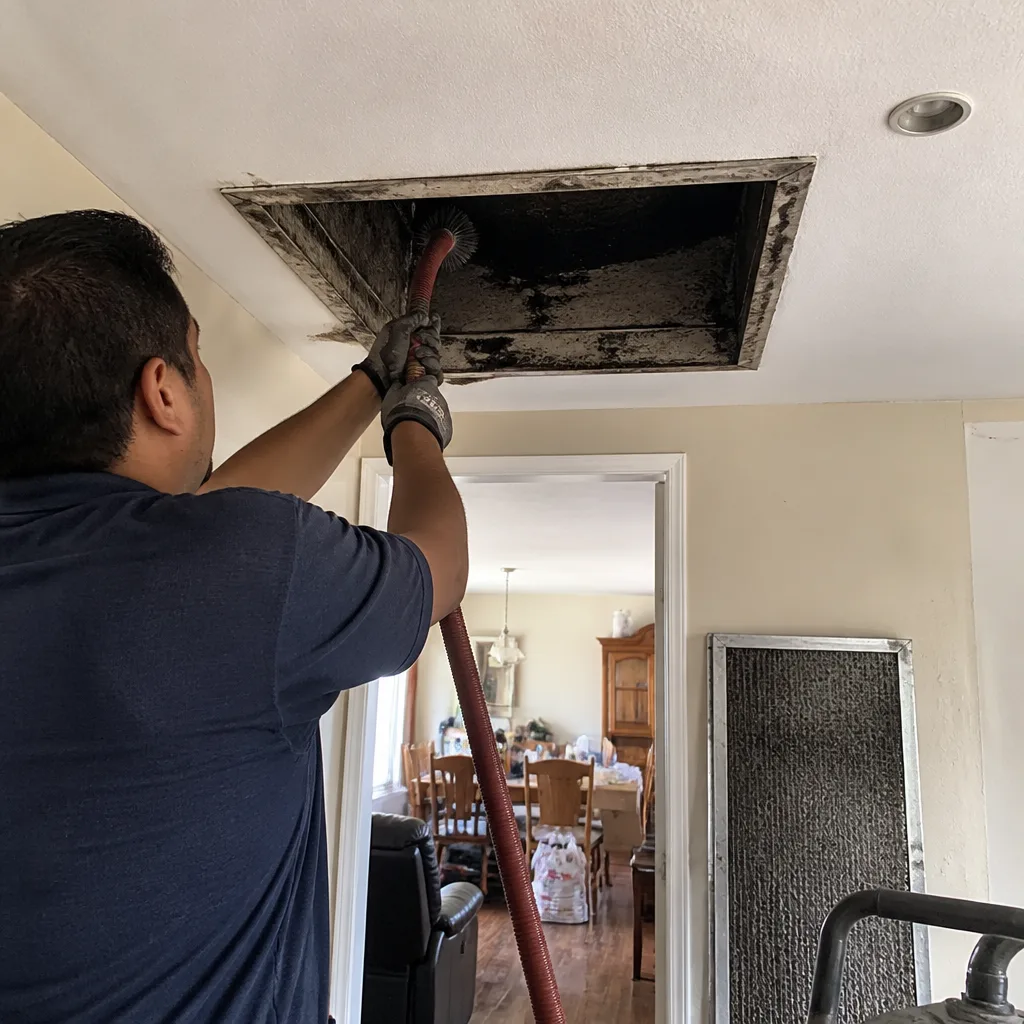 Before
 After
After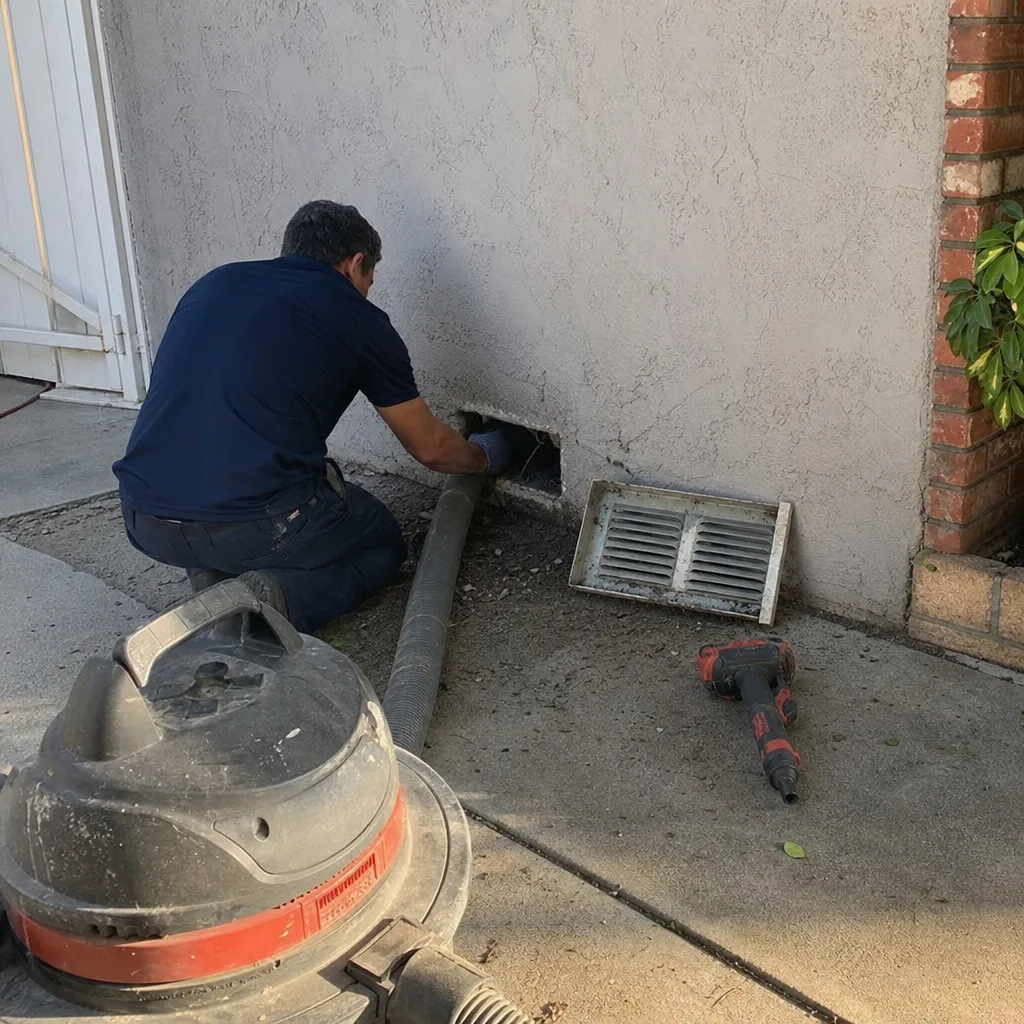 Before
 After
After