
Last updated October 15, 2026
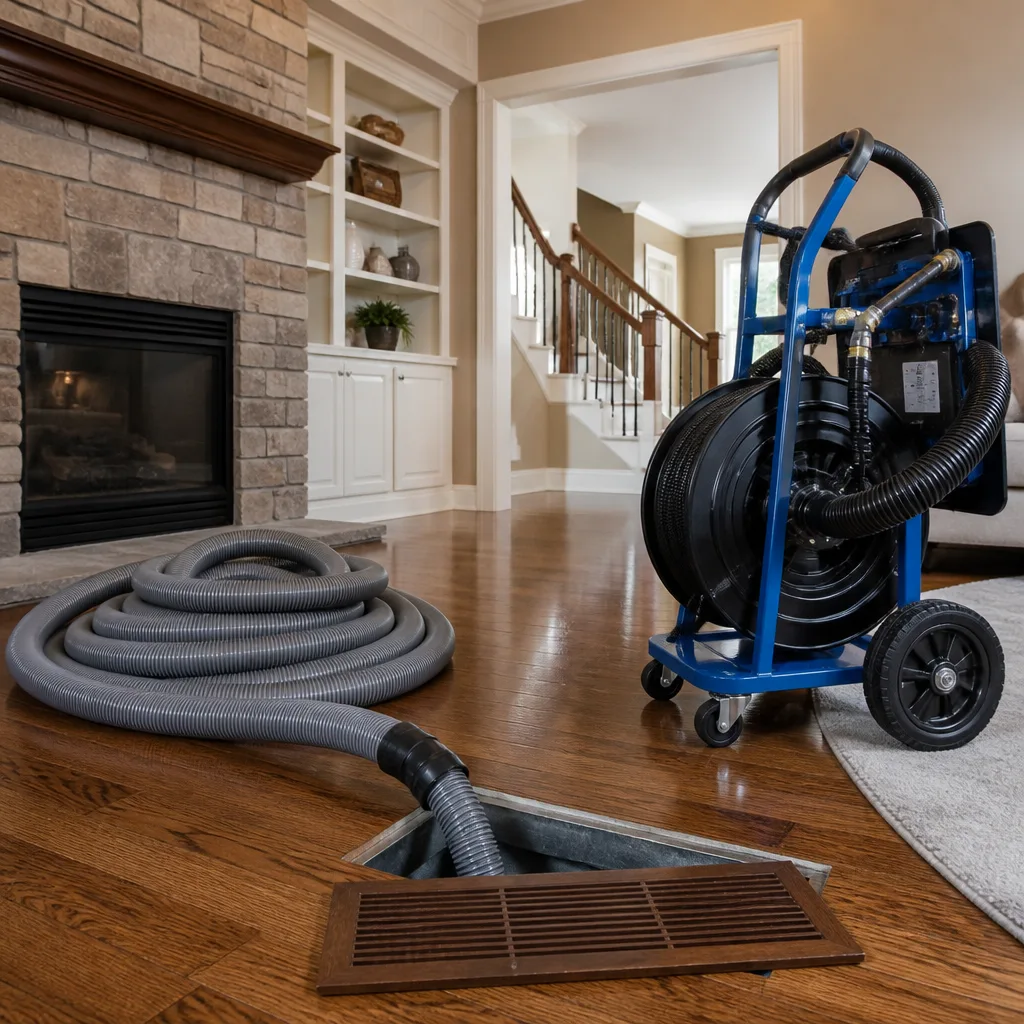 Whole-home duct cleaning
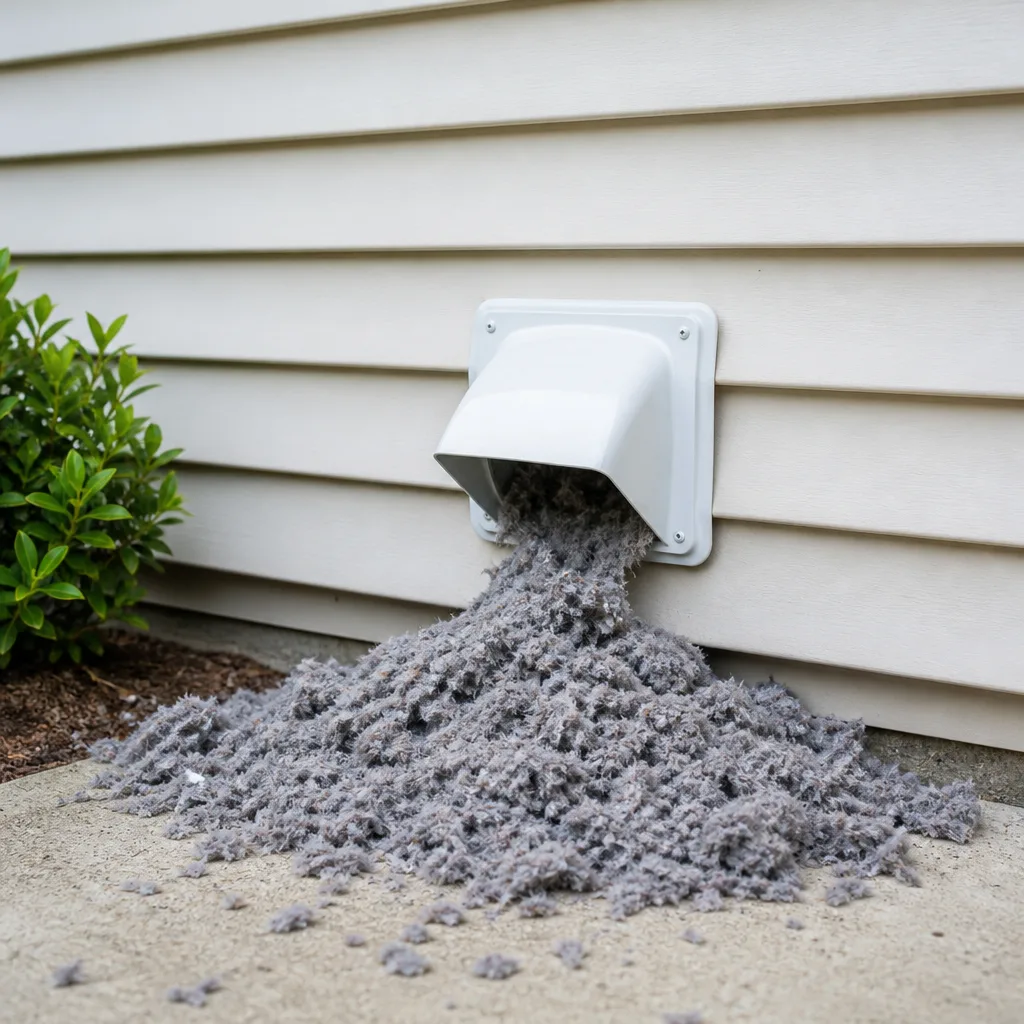 Dryer vent cleaning
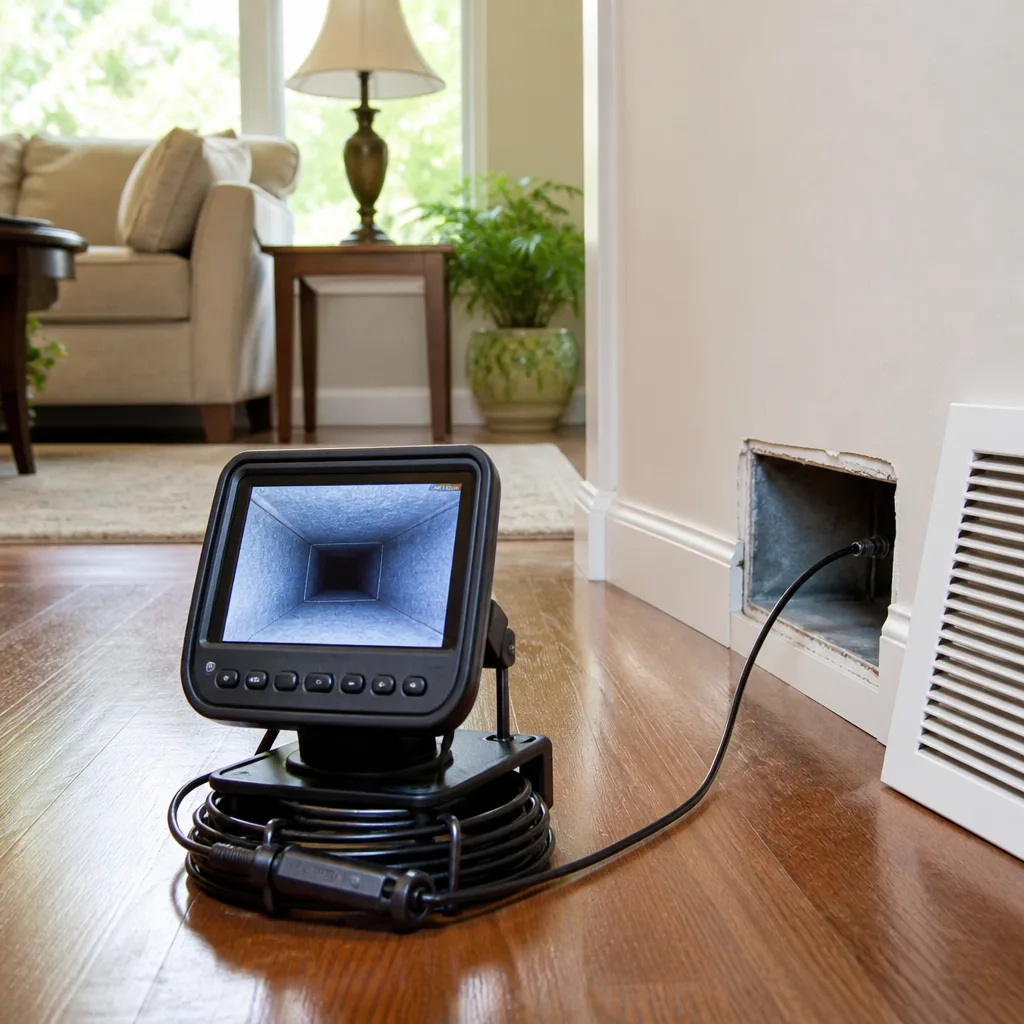 Camera inspection
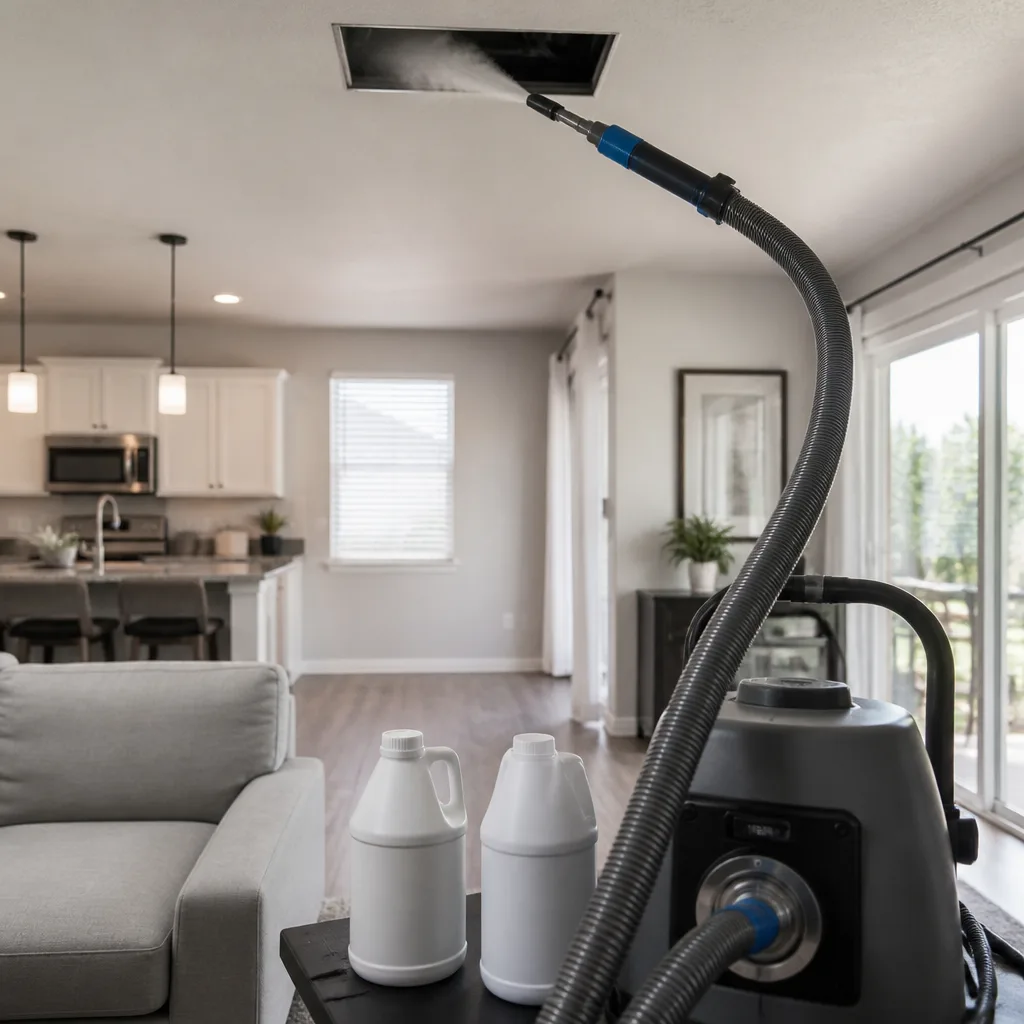 Sanitizing & deodorizing
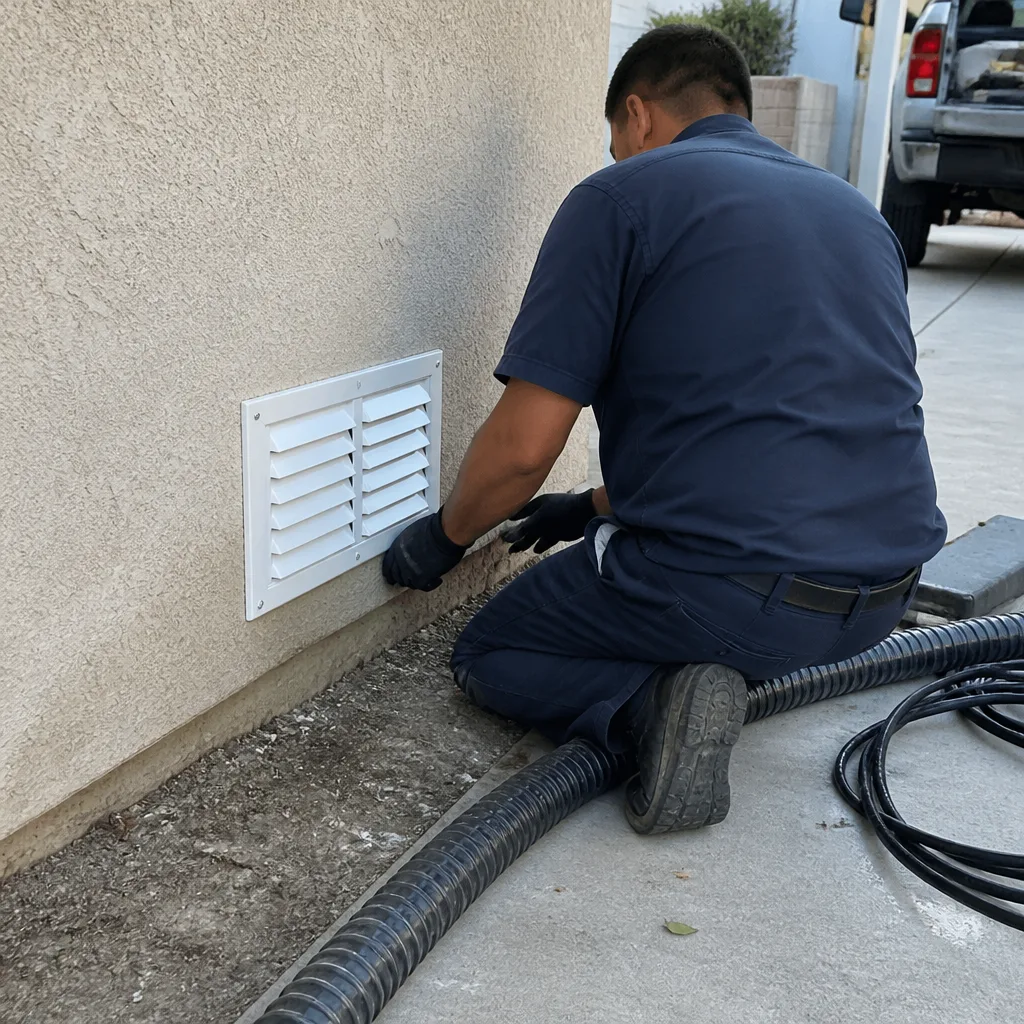
Whole-system duct and dryer vent check with before-and-after photos - you see exactly what came out of your vents
That "$99 whole-house special" is a bait ad - the real number appears once they are in your hallway, or the "clean" is a shop-vac at the register. We photograph the inside of your ducts before and after instead.
Seasonal Air Duct Cleaning Care for Woodland Hills: Year-Round Homeowner’s Guide
Woodland Hills recorded over 200 days of “Very Unhealthy” or “Hazardous” air quality in one recent five-year stretch. Every one of those days pushed particulates into homes through ductwork that was running to keep people cool. Woodland Hills doesn’t have four equal seasons. It has a wildfire-smoke fall, a dusty Santa Ana winter, a high-pollen spring, and a heat-stress summer. Each one creates a different kind of duct system load. This guide walks you through what to do, month by month, so your ductwork filters instead of redistributes.
Styles & brands we work with
Quick Answer
Seasonal air duct maintenance in Woodland Hills means scheduling specific tasks around the San Fernando Valley’s real weather patterns, not a generic “clean once a year” rule. You should inspect filters after wildfire smoke events (fall), check exterior vent caps and attic duct connections during Santa Ana winds (winter), protect ducts during any spring remodeling, and run a prep inspection before summer’s 90-day AC marathon. Each season creates a different contamination risk, and each has a specific, calendar-timed response. Most whole-system cleanings in Woodland Hills run $350 to $650, and a written price before work starts is a non-negotiable standard at Cardinal Air Duct Woodland Hills home.
Table of Contents
- Fall (September – November): The Post-Wildfire Smoke Filter Protocol
- Winter (December – February): Santa Ana Wind Season Checklist
- Spring (March – May): Pollen and Renovation Season Protection
- Summer (June – August): Heat Stress and the AC Marathon
- Your Annual Duct Care Calendar: Month-by-Month Owner vs. Pro Responsibilities
- What Seasonal Duct Care Actually Costs in Woodland Hills
- Common Mistakes to Avoid
- When to Call a Professional
- Frequently Asked Questions
- The Bottom Line
Fall (September – November): The Post-Wildfire Smoke Filter Protocol
Fall in Woodland Hills means one thing above all else: wildfire smoke. When the Santa Susana Mountains or Malibu hills burn, the entire western Valley sits in a smoke plume for days or weeks at a time. Your HVAC system is running, pulling that smoky outside air across your filter and through your ducts. The filter catches some of it. The rest settles as a fine gray film on the inside of return registers, plenums, and duct walls.
What a MERV-13 Filter Should Look Like After a Smoke Event
This is the single most useful diagnostic tool you have. Pull your filter after a smoke event and look at it. A new MERV-13 filter is white or cream colored. After a bad smoke week, it should look uniformly gray or brown. That’s the filter doing its job. What you don’t want to see: heavy black streaks, a greasy film, or a filter so loaded it’s bowing in the middle. A bowed filter means it’s been left too long and dirty air has been bypassing it entirely. If your filter is charcoal-black or has a sticky residue, that’s not just smoke. That’s smoke mixed with construction dust, brake dust from the 101, and aerosolized cooking oils. At that point, the filter is saturated and the duct system downstream needs a professional assessment, not just a filter swap.
As a rule: if the filter is visibly soiled after one smoke event, the ducts saw that same air. The filter only catches what passes through it. Air takes the path of least resistance, which includes every gap around the filter frame and every seam in the ductwork.
Step-by-Step Fall Protocol for Woodland Hills Homeowners
- Replace your filter after every significant smoke event. Not at the 90-day mark. If the air outside looks brown or smells like a campfire, that filter is done. Keep two spares in the garage from September through November.
- Wipe down visible return registers and vent covers. Use a damp microfiber cloth. If the cloth comes away gray or black, that’s the same film building inside the ducts where you can’t reach.
- Run your system on “fan only” for 30 minutes after replacing the filter. This pulls air across the new filter without heating or cooling, letting it catch loose particulate stirred up by the swap.
- Check your condensate drain line. Smoke particles mix with condensation and create sludge. A clogged line in fall means a water leak or mold growth by winter. Pour a cup of white vinegar down the line once a month during smoke season.
- If the filter looked black, call for a duct inspection. A saturated filter is the canary. The ducts saw the same air, and a full professional Air Duct Cleaning in Woodland Hills is how you reset the system before winter shuts the windows for good.
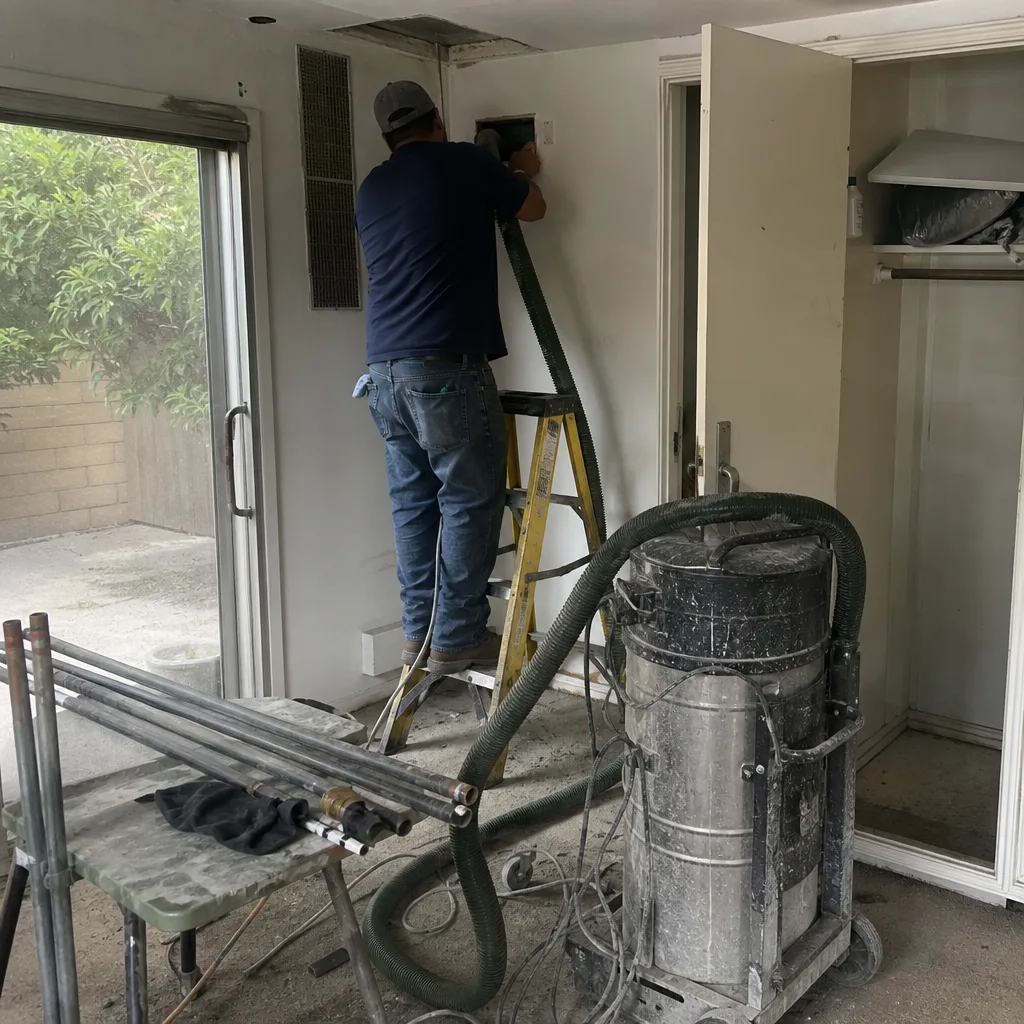
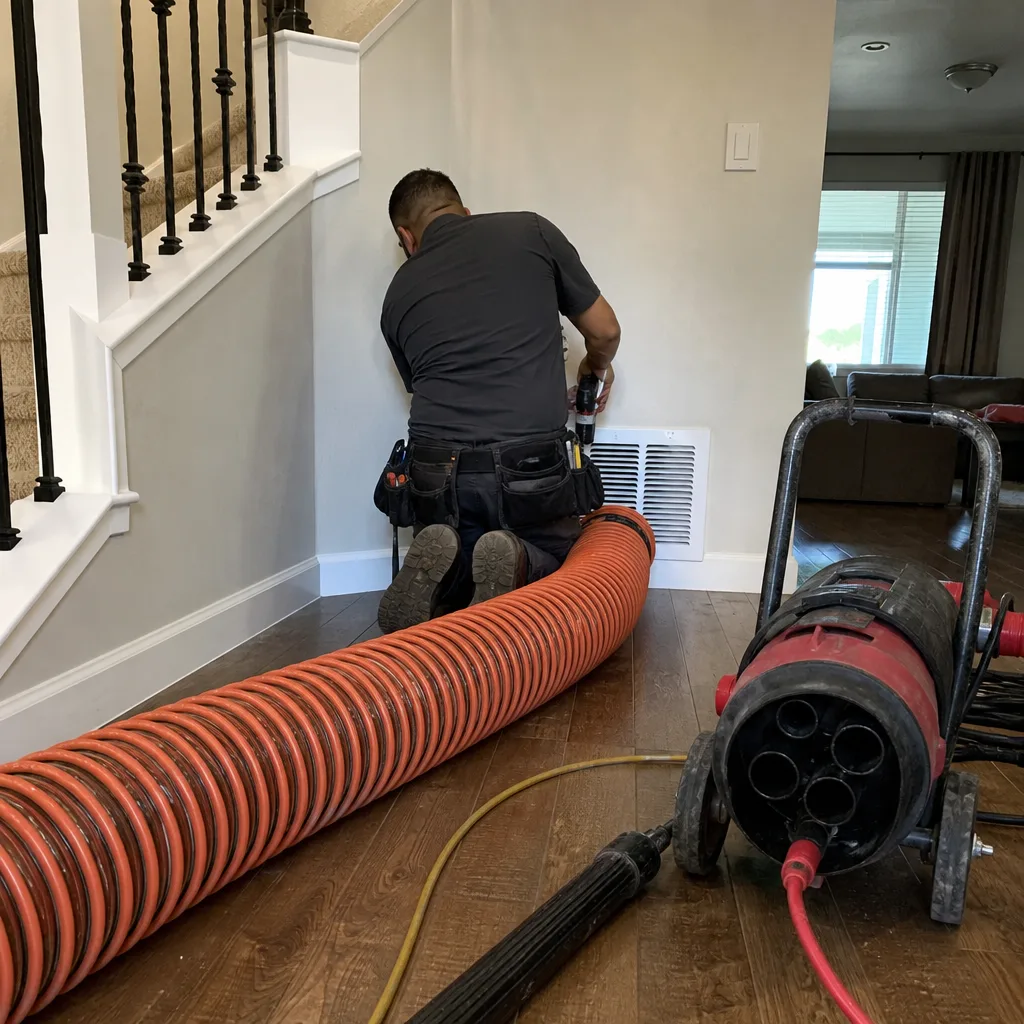
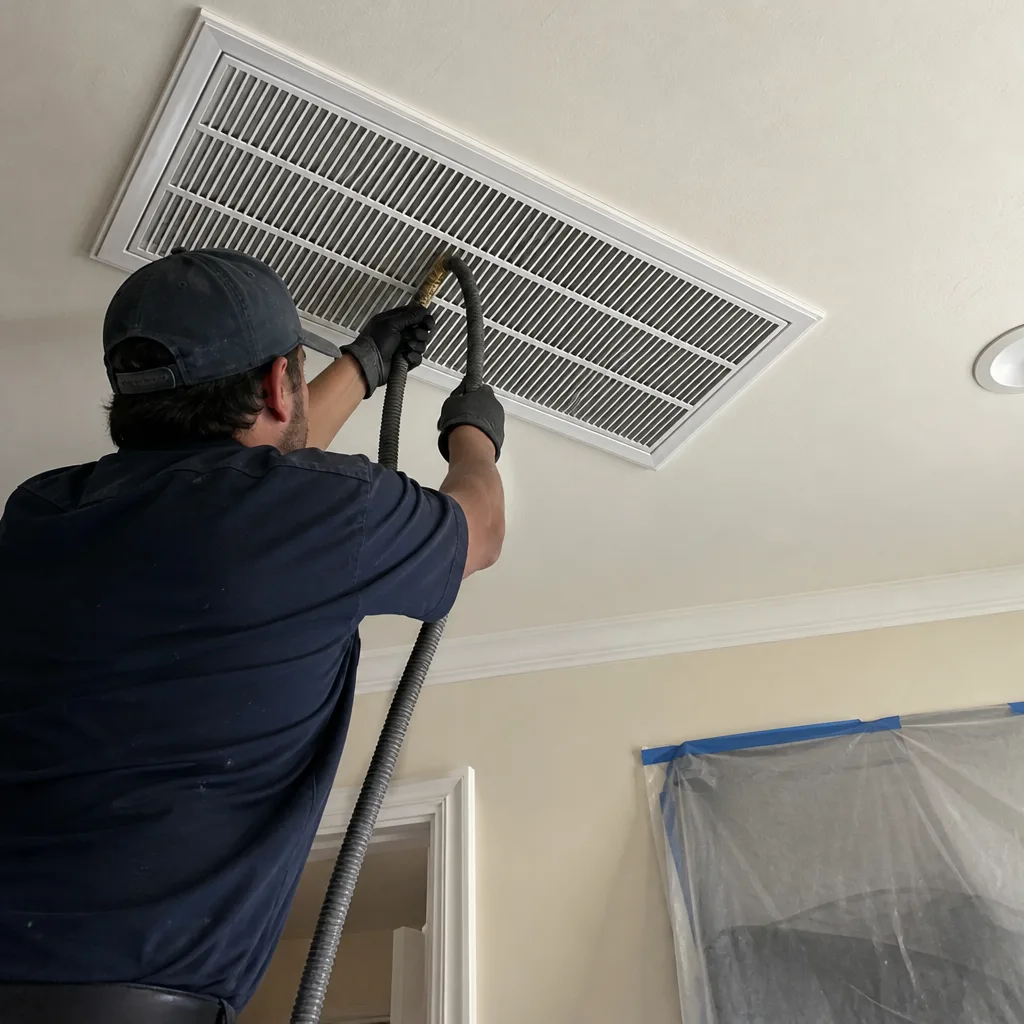
We run Rotobrush rotary brush systems and Nikro HEPA-rated vacuums on our Air Duct Cleaning services for post-smoke jobs. The brush agitates the particulate off duct walls, and the negative-pressure extraction, that means the loosened debris goes straight into the vacuum rather than back into your living room, pulls it into a sealed containment unit from Abatement Technologies. A shop vac in the register won’t touch the film that’s bonded to the duct liner.
Winter (December – February): Santa Ana Wind Season Checklist
Winter in Woodland Hills isn’t cold snaps and rain. It’s Santa Ana winds, those hot, dry, relentless gusts that blow down from the high desert through the passes and hit the Valley hard. You’ll hear them at 3 a.m., rattling vent caps and flexing rooftop duct connections. The damage is mechanical, not just dirty air: debris infiltration, loosened joints, and vent caps thrown open or off entirely.
What the Santa Anas Actually Do to Ductwork
Think of your ducts as connected segments. Every joint is sealed with mastic or foil tape when it’s installed. But attics in Woodland Hills swing from 30 degrees at night to 110 in the afternoon sun, and that thermal cycling ages tape quickly. Add 60 mph wind gusts vibrating the entire attic structure, and connections that were tight at installation start to separate. Once a joint loosens, the negative pressure from your system pulls in whatever the Santa Anas are carrying: fine silt, leaf debris, rodent droppings, and the ever-present gypsum dust from the local hills.
Winter Checklist: What to Check and When
- Inspect exterior vent caps after every major wind event. Walk the exterior of the house. Look for vent caps that are dented, hanging open, missing their flap, or surrounded by blown-in debris. A bathroom or kitchen vent cap that’s stuck open is a highway for dust and pests.
- Check your attic access points. If you can safely access the attic, look at the duct runs. They should be straight and supported. A duct that’s sagging, kinked, or pulled away from a register boot is a problem that will only get worse. If you hear a whistling sound near registers when the system runs, that’s a leaking connection.
- Clean outdoor condenser coils. Santa Anas coat AC condensers with a fine silt, especially homes on the north end of Woodland Hills near the hills. Rinse the coil with a garden hose, low pressure, from the top down. Do this after wind events, not during them.
- Feel for drafts at interior registers. If outside air is blowing in through a register when the system is off, your ducts have an open pathway to the exterior. That’s conditioned air escaping and dusty air entering.
- Check your Dryer Vent Cleaning in Woodland Hills needs. Santa Ana wind season is when exterior dryer vent caps take the most abuse. A flap that won’t close properly lets in dirt, birds, and cold air, and a kinked vent run is a fire hazard. If drying times are creeping upward or the exterior cap is damaged, address it before lint accumulates further.
One winter-specific pattern we see in Woodland Hills: homes on the south side of Ventura Boulevard near the foothills get significantly more windborne debris in their attic duct runs than homes closer to the 101. It’s not a small difference. If you’re in a wind-facing position, the seasonal checks matter twice as much.
Spring (March – May): Pollen and Renovation Season Protection
Spring in Woodland Hills is beautiful. It’s also the highest-risk time for duct contamination if you’re doing any indoor work. Here’s why.
The Valley’s spring pollen load is enormous. Oak, olive, juniper, and grass pollens all peak between March and May, and the warm Valley air keeps them suspended for long periods. Every time a door opens or a window cracks, that pollen enters the home. Your HVAC system pulls it into return registers and forces it through ducts. Pollen is sticky and microscopic, meaning it clings to duct walls where later moisture makes it a food source for mold growth.
Then comes renovation season. Spring and early summer are the most popular times for bathroom remodels, kitchen upgrades, and room additions across Woodland Hills. Drywall dust, tile adhesive fumes, sanding particulate, and paint overspray all get pulled into the return air stream if the system is running during construction. We’ve walked into homes in Walnut Acres and Carlton Terrace where a three-week bathroom remodel left a half-inch of gypsum dust inside the return plenum.
Protective Steps to Take Before Starting Any Indoor Work
- Seal off return registers in the work area. Use magnetic covers or 4-mil plastic sheeting with painter’s tape. Cut off the intake path before the work begins. If returns aren’t sealed, every hour of sanding pumps dust directly into the duct system.
- Shut the HVAC system off during active work. You want no air movement through the system while dust is being generated. Set the thermostat to “off,” not just “fan on.”
- Change the filter immediately after construction is complete. Do not wait. That filter has been catching what already got pulled in.
- Run the system on fan-only for a few hours after changing the filter. This circulates air through the clean filter and gives you a baseline.
- Examine register grilles for white or gray buildup. A dust line forming on the register face within days of the project finishing means duct contamination happened despite precautions. At that point, schedule a professional cleaning.
We use professional-grade containment units from Abatement Technologies on remediation jobs where dust has heavily contaminated duct runs. It’s the difference between extracting dust out of the home and just pushing it around. Pollen, if it’s been sitting in ducts through several springs, isn’t just an allergen, it’s an accumulated layer that reduces airflow and gives your blower motor more resistance to push against.
Summer (June – August): Heat Stress and the AC Marathon
Woodland Hills regularly records some of the hottest temperatures in the entire San Fernando Valley. July and August days above 100 degrees aren’t exceptional; they’re the normal seasonal floor. Your AC is running at maximum output for 90 continuous days, sometimes longer. That sustained workload puts heat stress on every component of the HVAC system, and the ductwork takes more of a beating than most homeowners realize.
How Sustained Heat Affects Flex Duct Connections
Most Woodland Hills homes use flexible duct runs in the attic. Flex duct is a plastic inner core wrapped in fiberglass insulation with a foil exterior. It’s installed in sections and connected at joints with metal collars and zip ties or clamps. Here’s what happens when the attic hits 130 degrees day after day: the plastic inner core softens, the foil exterior expands and contracts, and the connection points slowly work loose. Under heat stress, the duct material itself starts to sag between supports. A sag creates a low point where condensation collects, and that moisture combined with 130-degree heat is an ideal environment for mold growth.
What a Summer Prep Inspection Covers
The smartest time to address heat stress is before peak season, in late May or early June. A summer prep inspection for your HVAC Cleaning in Woodland Hills systems should cover:
- Attic duct visual inspection. Every accessible run gets checked for sagging, kinking, disconnected collars, and compromised insulation. We’re looking for the joints that have started to pull apart but haven’t failed yet.
- Supply and return plenum connections. The plenums are the metal boxes where the ducts attach to the air handler. These see the highest pressure differential and are the most common failure point on Woodland Hills systems. A plenum that’s pulled loose is pumping cooled air into the attic, and every dollar of that air is wasted.
- Blower motor and evaporator coil condition. Dirty coils reduce heat exchange efficiency. A lightly dusted coil is a 10 percent efficiency loss. A heavily fouled one is 30 percent or more. If your July electric bill hits $700, ask whether the coil and blower are clean.
- Refrigerant line inspection. Lines should be insulated and free of kinks. Exposed copper radiating heat directly reduces system capacity.
- Filter fit check. A filter that doesn’t seal completely around its frame lets unfiltered air bypass and coat the evaporator coil with particulate. That’s the most common cause of component failure we encounter in summer.
Homes in the Woodland Hills foothills and canyons, particularly along Mulholland and Topanga adjacent streets, face the dual threat of maximum summer heat plus lingering dust from the surrounding open space. Their duct systems simply work harder.
Your Annual Duct Care Calendar: Month-by-Month Owner vs. Pro Responsibilities
Here’s the entire year in one place. These are the specific actions that match Woodland Hills’ actual climate pattern, assigned by month.
January
Owner: Inspect exterior vent caps after any Santa Ana wind events. Check for rattling or free-spinning vent caps. Pro: Nothing scheduled unless wind damage is found.
February
Owner: Visually inspect attic duct runs for sagging or separated connections. Feel for drafts at registers when the system is off. Pro: If ducts are sagging or joints are separated, a resealing or re-support job before spring.
March
Owner: Confirm pollen season has begun and decide whether to run the system with windows closed in high-pollen weeks. Swap in a fresh MERV-13 filter. Pro: Spring inspection is a good window before renovation season starts.
April
Owner: If doing any indoor remodeling, seal returns and keep the system off during work. Check registers for dust buildup. Pro: Post-construction duct cleaning if dust is visible at register grilles.
May
Owner: Rinse the outdoor condenser coil. Confirm the filter seals properly around the frame. Pro: Summer prep inspection: coil, plenum, blower, refrigerant lines, duct connections. This is the single highest-value visit all year.
June
Owner: Check the system is maintaining setpoint without short cycling. Feel for temperature differences between rooms. Pro: Address any issues before the peak heat arrives.
July
Owner: Replace filter mid-summer, even if it doesn’t look done. The AC is running 14+ hours daily. Pro: Only on an as-needed basis. Don’t open the system mid-summer unless it’s malfunctioning.
August
Owner: Monitor energy bills. A sharp spike with no change in usage pattern points to a duct leakage or coil fouling issue. Pro: Diagnostic visit if bills are anomalous or airflow has dropped.
September
Owner: Watch the wildfire smoke forecast. Once the first serious smoke event hits, swap the filter the day after. Pro: If the smoke event was prolonged, this is the window for a post-smoke duct assessment.
October
Owner: Post-smoke filter check. Look for black residue or a bowed filter. Pro: Duct cleaning if the system pulled in significant smoke particulate.
November
Owner: Check condensate drain line. Clean the line with vinegar if you’ve had smoke or dust in the system. Pro: Annual filter housing check: confirm gaskets and seals are intact before winter.
December
Owner: Pre-Santa Ana exterior check of all vent caps. Have supplies ready: filters, drain cleaner, microfiber cloths. Pro: End-of-year system health check if the homeowner wants a clean baseline going into January.
Your ductwork isn’t a set-it-and-forget-it part of the house. It’s a dynamic system that responds to the environment, just like the rest of the home. When the environment throws wildfire smoke, a hundred days of triple-digit heat, and 60-mph wind events at it, the system needs seasonal attention.
What Seasonal Duct Care Actually Costs in Woodland Hills
Let’s stop dancing around the price. For a detailed look at pricing, see our Air Duct Cleaning Cost Breakdown: The Woodland Hills Homeowner’s Reference for 2026. Here’s what we see in the Woodland Hills market right now.
Typical Price Ranges in Woodland Hills
- Whole-system air duct cleaning: $350 to $650 for a typical 2,000 to 2,500 square-foot home with standard duct layout. Larger homes or systems with multiple air handlers run $650 to $950.
- HVAC coil and blower cleaning: $150 to $300 as an add-on during duct cleaning. Standalone work runs $250 to $400.
- Dryer vent cleaning: $125 to $200 for a standard run from laundry room to exterior wall.
- Post-construction duct cleaning: $400 to $800 depending on the extent of dust infiltration and whether containment is needed.
- Duct repair and resealing: $15 to $35 per connection or joint, depending on access difficulty. Attic work costs more than crawlspace work.
- Filter media: MERV-13 filters run $15 to $25 each at local hardware stores. Budget for 4-6 replacements per year in Woodland Hills’ air quality, not the usual 2-4.
What you should never see is a per-vent price that’s a teaser and a final bill that’s three times higher. The duct cleaning industry has earned some of its bad reputation with that exact bait-and-switch. Cardinal operates on one flat price per system, agreed before any work starts. The price you see on the written estimate is the price on the invoice. No per-vent math at the door. No “this will need an extra treatment” surprise once the technician is inside. That’s the standard we hold ourselves to, and it’s what every homeowner should demand.
Common Mistakes to Avoid
- Treating every season the same way. A spring cleaning after renovation season is not the same job as a fall cleaning after wildfire smoke. Each season in Woodland Hills creates a different contaminant profile, and the inspection and cleaning approach should match.
- Changing the filter once a year. In Woodland Hills air, that’s not maintenance, it’s neglect. Summer AC load and winter Santa Anas mean filters should be checked monthly and swapped 4-6 times annually, minimum.
- Assuming a visible register means the whole system is clean. The register grille is the last thing air touches. It tells you nothing about what’s coating the interior of the return plenum or the trunk line, which are the areas that matter.
- Running the HVAC during indoor remodeling. This is the fastest way to coat an entire duct system with gypsum dust. We see it constantly in Woodland Hills renovation projects. Sealing off returns costs $20 in materials. Cleaning the resulting contamination costs hundreds.
- Ignoring exterior vent caps until something breaks. Santa Ana winds will absolutely damage vent caps, and a damaged cap opens the system to pests, debris, and moisture. Checking caps after wind events takes ten minutes.
- Falling for a $49 whole-house duct cleaning coupon. A real duct cleaning with professional equipment generates 2-4 hours of labor, equipment maintenance, and proper containment. No legitimate operation can do that for $49. That price is the hook for the upsell. This is exactly why we hand over a written price before a single duct is touched.
When to Call a Professional
There’s maintenance, and then there’s repair and remediation. You should call a professional duct specialist when any of these conditions show up in your Woodland Hills home: visible mold growth around registers or inside the visible portion of ducts, a persistent musty smell that returns after you change the filter, a sudden sharp increase in energy bills with no corresponding weather change, black dust streaks that reappear quickly after cleaning register faces, evidence of rodent or pest activity in duct runs, or a major construction project was completed without proper return sealing. If the post-smoke filter is black or bowed, the ducts need professional assessment, not just filter replacement. Any time you’re in doubt about what you’re seeing, Cardinal Air Duct Woodland Hills offers free estimates in Woodland Hills. For regulatory context, see Air Duct Cleaning Permits, Codes & Inspections in CA: What You Need to Know. Call (559) 295-5878 and describe what you’re seeing. A live person will answer, and we’ll tell you honestly whether the problem needs a visit or is something you can handle on your own.
Frequently Asked Questions
Every 3 to 5 years is the standard interval for a whole-system cleaning in Woodland Hills, but that assumes you’re maintaining filters properly and responding to seasonal events. Wildfire smoke years or a major remodel can compress that to 2 years or less. The real answer is that you clean on condition, not on a calendar. If the post-smoke filter is black, if register faces keep accumulating dust within days of cleaning them, or if you can smell a musty odor when the system kicks on, those are condition-based signals that it’s time.
The cheap quotes are usually bait. A $49 whole-house offer assumes the actual job will be upsold once the technician is inside, usually into per-vent pricing, sanitizer packages, or “mold remediation” you can’t see. The low advertised price is the hook. Companies doing real work with professional-grade equipment like Rotobrush brush systems and Nikro HEPA vacuums have fixed labor and equipment costs that make a $49 job impossible. Ask for a written price before any work begins. If they won’t hand you one, that’s your sign to end the conversation. This is exactly the bait-and-switch pattern that gives the industry its reputation, and why we commit to a written, flat, per-system price every single time.
You should be shown before-and-after photos of your own ducts, not a brochure photo of someone else’s house. A professional job includes photo documentation of the interior of the supply and return plenums, the trunk line, and representative branch runs, taken before the work and after they’re cleaned. That’s part of The Relay Standard we operate under, and every customer sees their own system’s photographs. If a company refuses to show you photos or gives you generic images, that’s not transparency, it’s theater.
It helps when the ducts are actually part of the problem. If your ducts are carrying years of accumulated pollen, dust, and smoke particulate, then cleaning them removes a reservoir of allergens that gets redistributed every time the system runs. What it doesn’t do is solve allergies caused by live pollen entering the home through open windows or tracked in on shoes. Clean ducts plus proper filtration is the effective combination. Clean ducts plus no filtration just refills the system with the same allergens over time.
No. A shop vac can clean the first six inches of a visible register, and that’s exactly the part you can already see. The actual contamination lives in the trunk line and branch runs deep inside the system. Getting to that requires rotary agitation to break the dust film off the duct walls and high-powered negative-pressure extraction to pull it out through a sealed system. Half-measures leave the contamination in place and just move it around. The risk with improper cleaning is that you dislodge material from one location and deposit it deeper into the system where it’s harder to remove later.
Yes, in most Woodland Hills cases. The HVAC equipment is new, but the ductwork it connects to is whatever was already there. A new furnace or air handler pushing air through 20-year-old ducts with decades of accumulated contamination delivers contaminated air. New equipment also tends to move more air than older units, which means it can dislodge material that had been sitting in place and distribute it faster. If you’ve replaced your HVAC system, that’s actually the ideal time to have the ducts cleaned, because the system is already open and the work is more accessible. Call (559) 295-5878 for an exact quote. Estimates are free.
The Bottom Line
Woodland Hills’ air is not like other places. The Valley’s geography traps what the Santa Anas and the wildfires push through it. That means your duct system faces conditions that a generic maintenance calendar never accounts for. The filter is your early warning system. The Santa Anas are your structural test. Renovation season is your contamination risk. Summer is your endurance test. If you handle each season with the specific steps laid out here, your ducts stay clean longer, your system runs more efficiently, and you’re not breathing redistributed particulate from a smoke event that happened three months ago. For more guides & resources, browse our blog. If you’re in Woodland Hills and you want a real look at what’s inside your ductwork, Cardinal Air Duct Woodland Hills offers free estimates. Call (559) 295-5878. A live person answers, every time.
Written by Omar Haddad, Owner at Cardinal Air Duct Woodland Hills, serving Woodland Hills since 2005.
See the difference
 Before
 After
After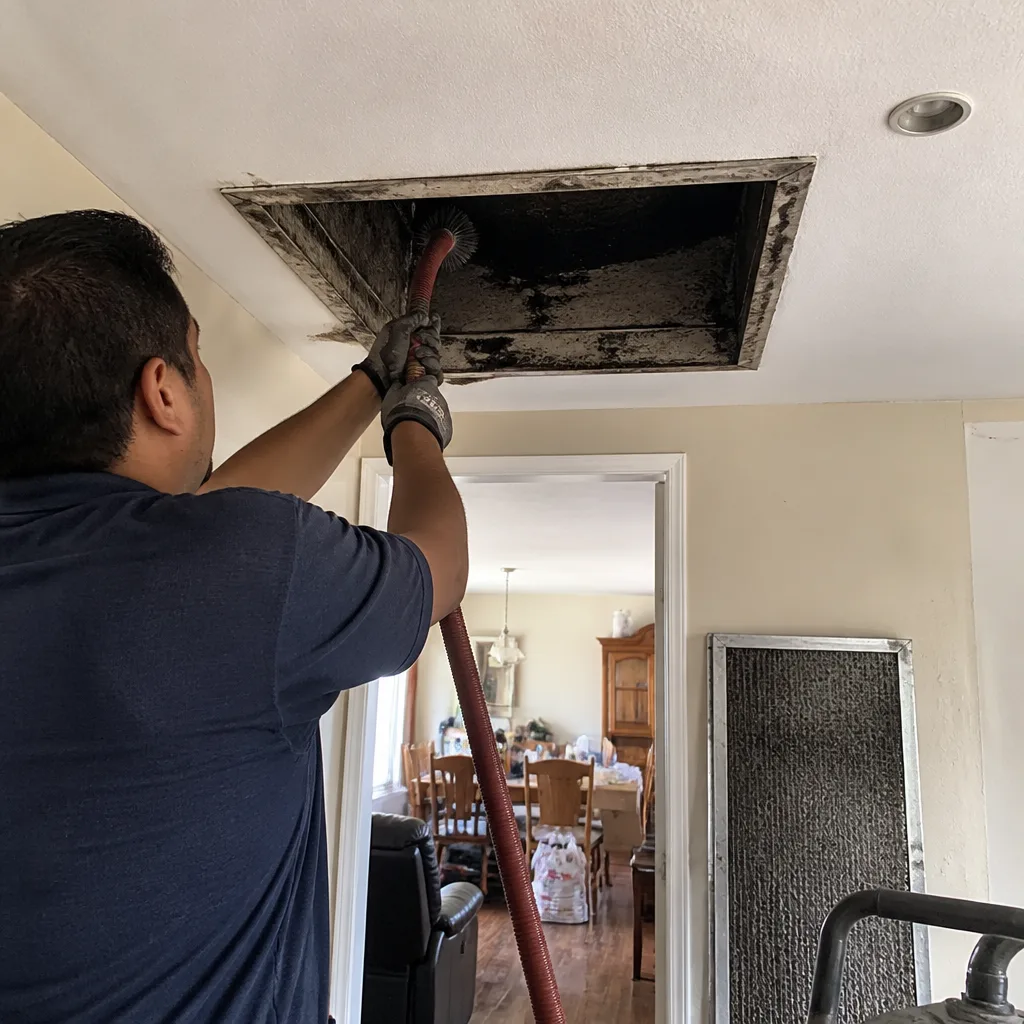 Before
 After
After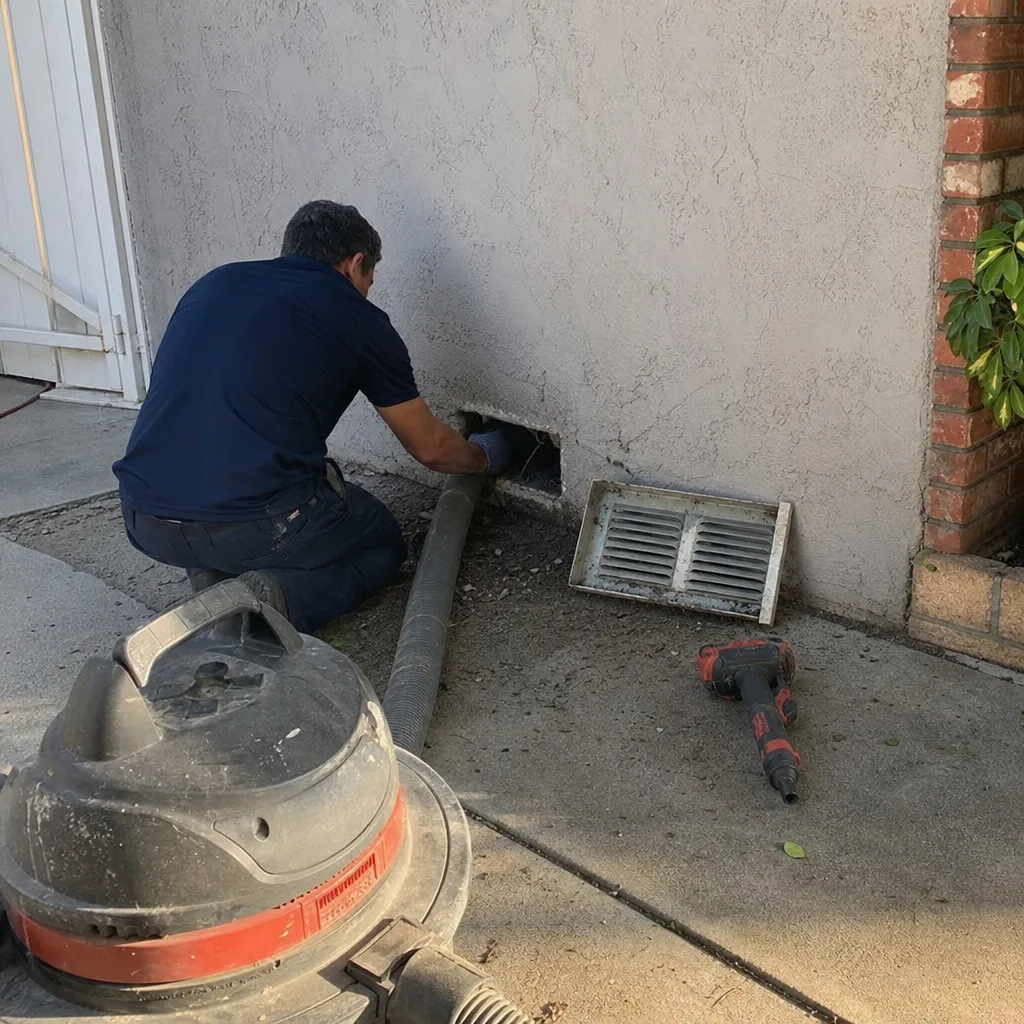 Before
 After
After