
Last updated October 15, 2026
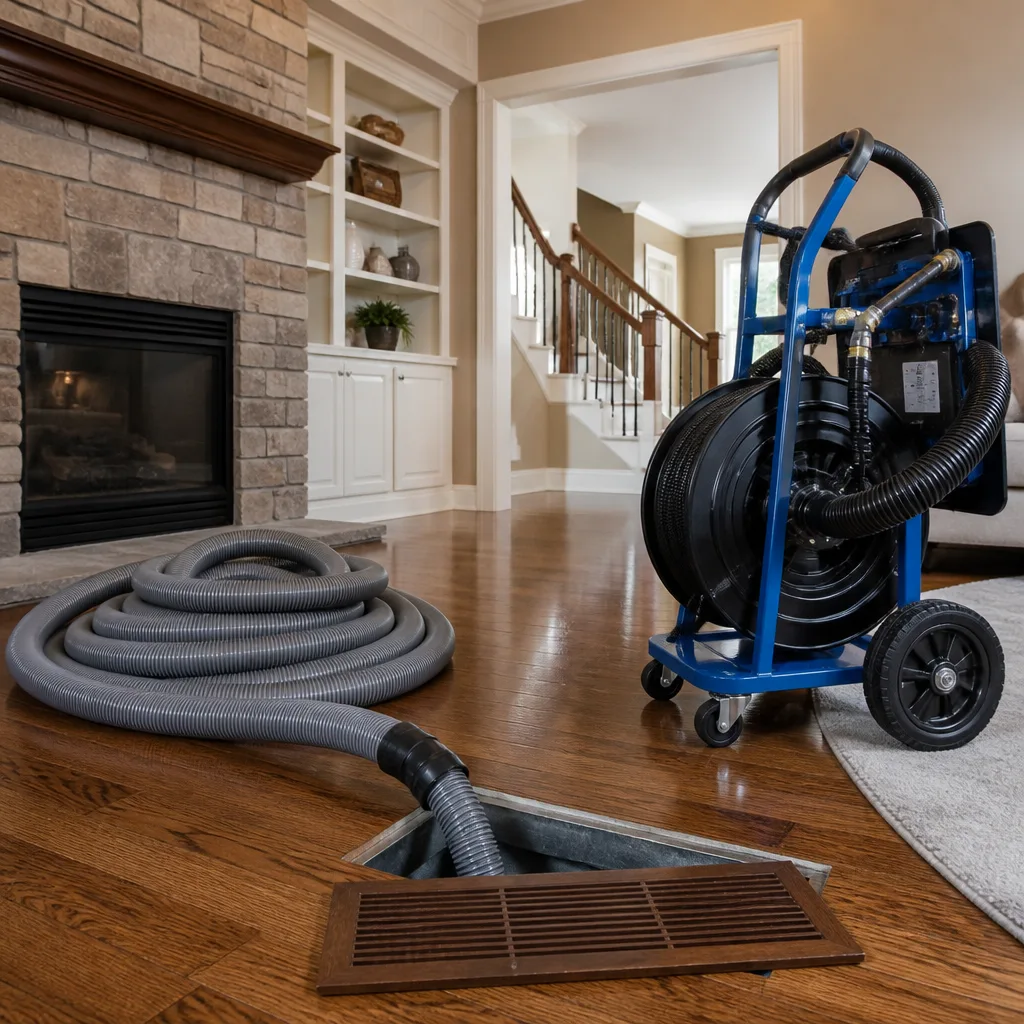 Whole-home duct cleaning
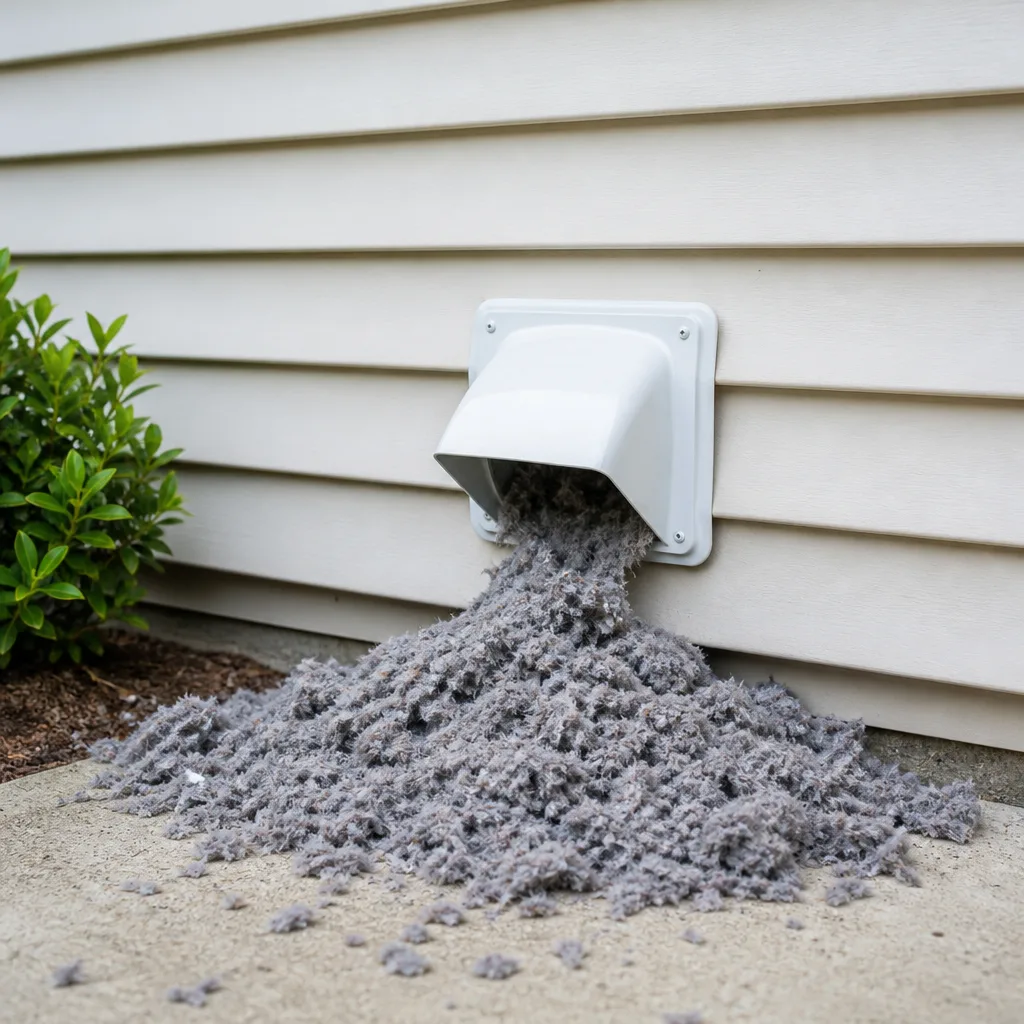 Dryer vent cleaning
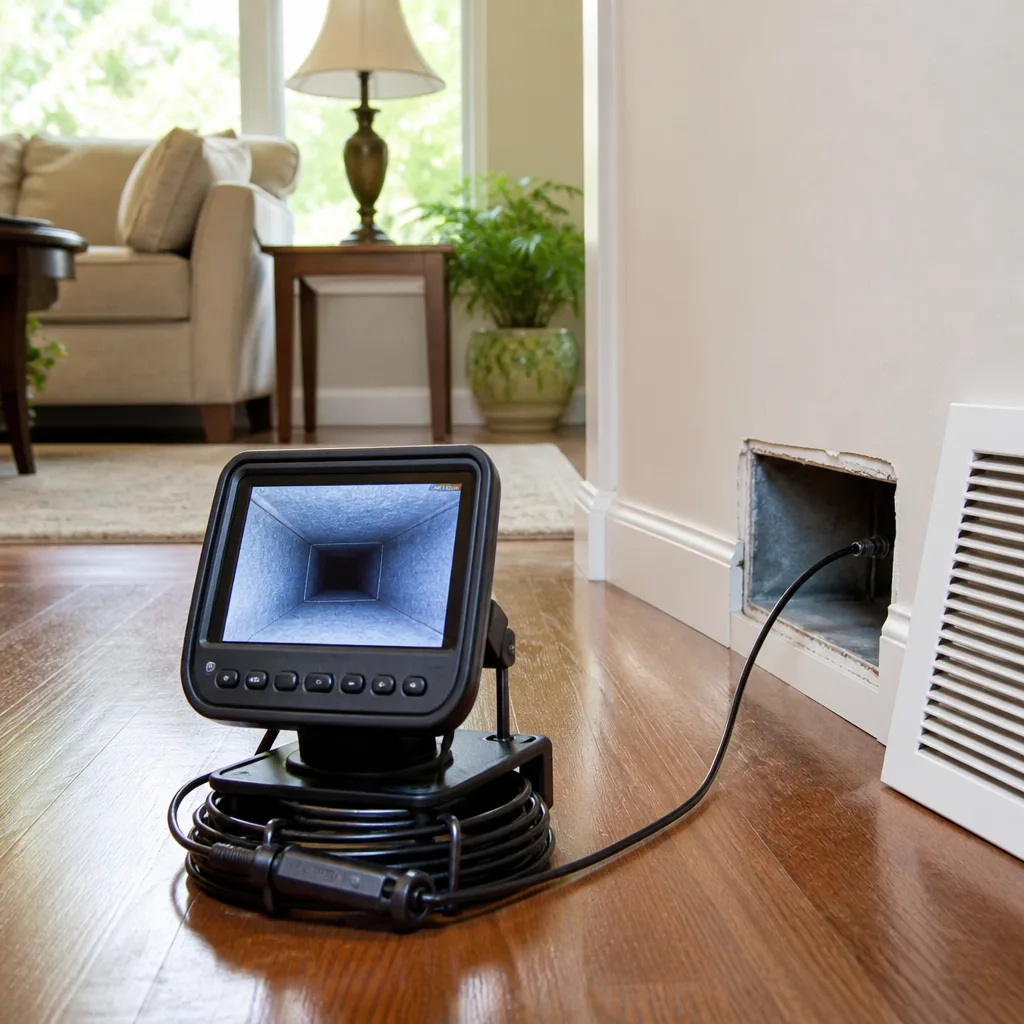 Camera inspection
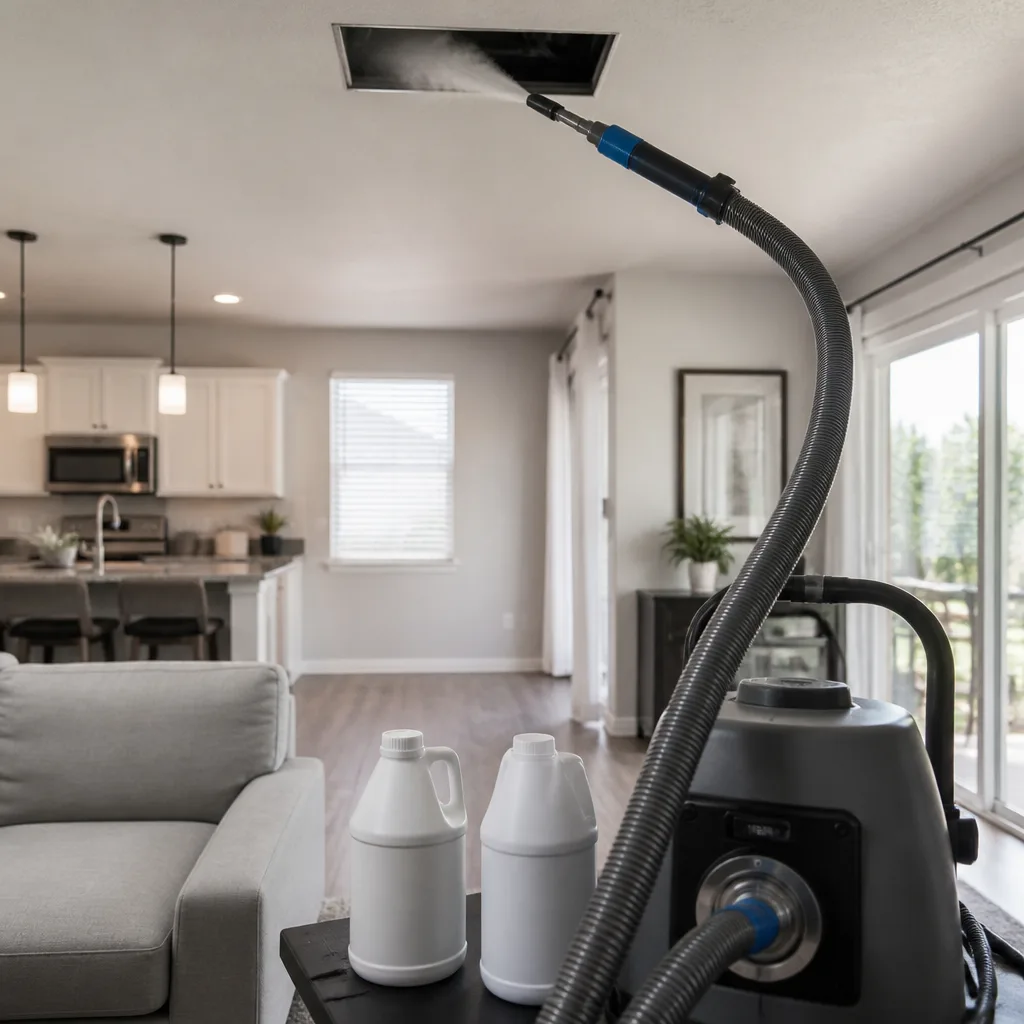 Sanitizing & deodorizing
Whole-system duct and dryer vent check with before-and-after photos - you see exactly what came out of your vents
That "$99 whole-house special" is a bait ad - the real number appears once they are in your hallway, or the "clean" is a shop-vac at the register. We photograph the inside of your ducts before and after instead.
DIY vs Professional Air Duct Cleaning: The Woodland Hills Homeowner’s Decision Guide
A $30 dryer vent brush kit from Home Depot will genuinely clean the first 6 feet of your dryer duct, and for a straight, short run that might be all you need. But that brush kit will not clean the other 25 feet of duct buried in your walls, and it will not capture the dust it knocks loose. In Woodland Hills, where oak pollen and wildfire ash settle into return ducts within months, that distinction matters more than most guides admit. This page gives you what the equipment-store aisle can’t: an honest capability table, the physics of why negative air pressure decides everything, and the specific scenarios where DIY is enough versus the four where it makes things worse. For more on when to hire help, see our guide on How to Hire a Air Duct Cleaning Contractor in Woodland Hills: A Step-by-Step Guide.
Quick Answer
DIY air duct cleaning in Woodland Hills works for register-level dust, filter replacement, and short straight dryer vent runs, but it cannot replicate the 1,500+ CFM negative-pressure extraction that a professional Rotobrush or Nikro system uses to pull loosened debris out of the house rather than into it. For anything beyond routine surface maintenance, or for homes with wildfire smoke residue, mold signals, rodent evidence, or a decade of accumulated buildup, professional air duct cleaning in Woodland Hills is the only approach that actually removes the problem instead of relocating it. Expect to spend $40 to $120 on DIY tools versus $300 to $600 for a full professional cleaning of a typical Woodland Hills home.
Styles & brands we work with
Table of Contents
- What a Homeowner Can Actually Do: The Honest Capability Table
- The Physics of Negative Air Pressure, Explained Without Jargon
- Three Woodland Hills Scenarios Where DIY Is Genuinely Sufficient
- Four Scenarios Where DIY Will Make Things Worse
- The Real Cost Comparison: Rental Equipment vs. Professional Work
- How to Tell If a Pro Is Actually Using Negative Pressure
- Why Equipment Brands Matter: Rotobrush, Nikro, and Abatement Technologies
- What You Should Be Doing Yourself Every Season
What a Homeowner Can Actually Do: The Honest Capability Table
Before we go further, let’s define the equipment gap in concrete terms. A homeowner’s shop vacuum pulls somewhere between 100 and 200 cubic feet per minute (CFM) of air. A professional portable negative-air machine from Abatement Technologies or a Nikro HEPA unit pulls 1,500 CFM or more. That is a 10-to-1 difference, and it determines what gets removed and what gets stirred up and left behind.
Here is the honest breakdown:
- Register-level dust and debris: DIY capable. Remove vent covers, wipe them down, vacuum what you can reach with a crevice tool. This clears the first 6 to 12 inches of each branch duct, which is where visible dust accumulates.
- Filter replacement: DIY capable and should be routine. In Woodland Hills, with our six-month pollen seasons, most homes need filter changes every 60 to 90 days, not the 90-day default on the packaging. We recommend Honeywell or Aprilaire filters with a MERV rating of 11 to 13 for most systems.
- Short, straight dryer vent runs: DIY capable, barely. If your dryer backs to an exterior wall and the vent is less than 8 feet with one elbow or none, a brush kit and shop vac can clear it. Anything longer, or any run with multiple turns, is where lint traps form and brush kits leave clogs in place.
- Main trunk lines and branch ducts beyond 6 inches of the register: Not DIY capable. Your vacuum cannot reach, cannot agitate adequately, and cannot capture what it does reach.
- Return air ducts and plenum boxes: Not DIY capable. These are the largest air channels in your home and the ones that accumulate the most debris. They require the airflow volume only professional equipment generates.
- Post-wildfire smoke residue or soot: Not DIY capable. This requires HEPA filtration during extraction and often a sanitizing treatment applied under negative pressure.
- Mold or microbial growth on duct surfaces: Not DIY capable and not safe to disturb without containment. Agitating mold without capturing it spreads spores through the home.
The pattern is simple: anything you can see and reach is DIY territory. Everything behind the wall is not.
The Physics of Negative Air Pressure, Explained Without Jargon
This matters more than any other factor in the DIY-versus-pro decision, and it’s the one that equipment rental aisles never explain. Negative air pressure is the difference between removing dust and relocating dust.
When a professional cleans ducts correctly, they do it under negative pressure. That means the cleaning machine is pulling more air out of the duct system than the surrounding room can supply through normal gaps and registers. The vacuum is connected to the main trunk line, and the entire system becomes a controlled vacuum zone. As a rotary brush or air sweep loosens debris from the duct walls, that loosened material has nowhere to go except into the suction stream and through the HEPA filter.
Here is what happens without negative pressure, which is what a homeowner with a shop vac and brush is doing. You push the brush into a duct, it loosens a layer of dust, and that dust becomes airborne. Your home’s HVAC fan then picks up that airborne material and distributes it through every register in the house. You have not cleaned anything. You have aerosolized it.
We have seen this exact sequence in Woodland Hills homes. A homeowner spends a Saturday brushing out their ducts, and then notices more dust on the furniture than before. They didn’t fail to clean. They failed to capture, and capturing is the entire job.
The threshold matters too. To maintain negative pressure on a home’s duct system while cleaning, the vacuum needs to move roughly 1,400 to 1,600 CFM minimum. That is what Nikro HEPA units and Abatement Technologies portable systems are rated for. A rented carpet cleaner does not get there. A shop vac does not get there. Consumer equipment physically cannot create the condition that makes cleaning possible.
Three Woodland Hills Scenarios Where DIY Is Genuinely Sufficient
We are not going to tell you that every home needs professional duct cleaning every year. That is not true, and the companies that say it are selling you something. Here are the three situations where doing it yourself is the right call.
1. Newer Home Needing Maintenance Only
If your Woodland Hills home was built in the last three to five years and you have changed filters consistently, your ducts likely have a thin dust layer but no significant buildup. In this scenario, routine maintenance is genuinely sufficient: wipe registers, vacuum the visible duct openings, change the filter, and move on. Professional cleaning at this stage is like shampooing a carpet that has never been walked on. What matters is establishing the maintenance habit, which means filter discipline.
2. Short, Straight Dryer Vent Run
If your dryer sits on an exterior wall and the vent exits directly behind it with a total run of 8 feet or less, a $30 brush kit and a shop vac can clear that line. Do it twice a year. For longer runs, check our Dryer Vent Cleaning Maintenance Checklist for Woodland Hills Homeowners. Lint is the leading cause of dryer fires, not a hypothetical in our climate, and a straight run is the one place where a brush genuinely reaches the entire problem. If your run is longer than 8 feet or has more than one elbow, this scenario no longer applies. Lint compacts at turns, and a brush without suction leaves compressed lint plugs in place.
3. Pre-Event Surface Cleaning
Before hosting a large gathering or when you simply notice dusty registers, a surface-level wipe-down is worthwhile. Remove each vent cover, wash it with warm water and dish soap, vacuum the visible duct opening to arm’s length, and dry everything before reinstalling. This is cosmetic cleaning, which is a legitimate use case. It will not change indoor air quality meaningfully, but it removes what people can see. That is what you’re actually solving for, and honesty about that is fine.
Four Scenarios Where DIY Will Make Things Worse
Conversely, there are four conditions where running a brush or vacuum into your ducts is actively harmful. Not ineffective, but harmful. If any of these apply, stop and call a professional before touching anything.
1. Post-Wildfire Smoke Infiltration
Woodland Hills sits in a wildfire-smoke corridor. When the Woolsey Fire or any wind-driven fire pushes smoke through the Valley, that smoke does not stay outside. Your HVAC system pulls it in, and the fine particulate settles in the ductwork. Disturbing that particulate without HEPA capture and containment spreads it through the home in concentrated form. Professional post-smoke cleaning requires negative pressure plus high-efficiency filtration during the entire cleaning process, and often a sanitizing treatment afterward.
2. Suspected Mold in the Ductwork
If you see dark staining around registers or smell a persistent musty odor when the system runs, do not agitate it. Mold spores are the concern, and a brush transforms a localized problem into a whole-house spore event. Professionals use containment, HEPA extraction, and antimicrobial treatments applied under controlled conditions. The test is simple: if you suspect mold, the answer is never DIY.
3. Rodent or Pest Evidence in Ducts
Droppings, nesting material, scratching sounds, or unexplained debris in registers indicate a pest issue. This requires more than cleaning, which is why it belongs with a professional who can identify the entry point and coordinate remediation before cleaning. Agitating rodent waste without proper protection is a genuine health hazard. A shop vac has no HEPA filtration and will aerosolize whatever is in that duct.
4. A System That Has Not Been Cleaned in 10+ Years
If you bought a Woodland Hills home and the inspection noted aged, dirty ducts, or the previous owner never had the system cleaned, the buildup is going to be thick, compacted, and adhered to duct surfaces. A brush will not remove it. More importantly, the first thing a professional cleaning does in this scenario is loosen a decade of accumulated material, which means containment and negative pressure are not optional refinements. They are the difference between clean ducts and dust coating every surface in the home.
The Real Cost Comparison: Rental Equipment vs. Professional Work
Here are honest numbers, because vague pricing is how this industry takes advantage of people.
DIY Path
- Dryer vent brush kit: $25 to $40 at Home Depot or Lowe’s.
- Shop vac with HEPA filter: $100 to $150 for a unit that actually has HEPA filtration. A standard shop vac without HEPA is not worth using for this purpose.
- Duct cleaning brush kit with extension rods: $30 to $60. These reach 15 to 20 feet into straight runs only.
- Equipment rental (select Woodland Hills Home Depot locations): $50 to $100 per day for a commercial-grade portable vacuum, though these units are typically 500 CFM or less and still cannot achieve true negative pressure on a whole system.
- Total DIY cost: $40 to $350 depending on what you already own.
- Time required: 3 to 6 hours for a full attempt.
- Result: Surface-level cleaning only. No capture of loosened material. No reach into main trunk lines.
Professional Path
- Standard air duct cleaning for a single HVAC system in Woodland Hills: $300 to $500 for most 2,000 to 3,000 square foot homes.
- Larger homes or dual systems: $500 to $900.
- Dryer vent cleaning as an add-on: $40 to $100 depending on run length.
- Post-wildfire smoke or mold remediation territory: $500 to $1,200 depending on treatment requirements.
- Time required: 3 to 5 hours, done by a crew with the equipment already on the truck.
- Result: Full-system negative pressure cleaning with HEPA capture and before-and-after visual documentation.
The honest assessment is this: DIY saves money only when the job is small enough that a professional visit would have been unnecessary anyway. For any system-level cleaning, the rental path costs half as much but achieves a fraction of the result, and it does not include the most valuable professional output: proof the work was done. A professional who hands you before-and-after photos of your own ducts, which our technicians do on every job, removes the “did they actually clean it” question that plagues this industry.
How to Tell If a Pro Is Actually Using Negative Pressure
Not every professional duct cleaning company is doing equal work. Some run a vacuum through the registers, same as a homeowner would, and call it a day. Here is how to verify negative pressure before anyone starts.
- Ask what machine they use and its CFM rating. A legitimate answer includes the brand and a number at or above 1,400 CFM. “A big vacuum” is not a legitimate answer.
- Ask where the vacuum connects. Proper negative-pressure cleaning connects the suction unit to the main trunk line, often at the plenum or an access cut near the furnace. Register-only vacuuming is not the same process.
- Ask how they prevent cross-contamination during cleaning. The answer should mention sealing registers or working in zones while the negative pressure holds throughout the system.
- Ask for before-and-after photos. Any professional in Woodland Hills who cannot or will not show you photographic proof of the duct interior before and after the work is not a professional. This is a standard part of our process at Cardinal Air Duct Woodland Hills home, and it should be a standard part of yours.
The equipment name alone is a strong filter. When a company can rattle off Rotobrush for agitation, Nikro for HEPA extraction, and Abatement Technologies for containment, they have professional-grade equipment. When they get vague, they have a truck-mounted shop vac.
Why Equipment Brands Matter: Rotobrush, Nikro, and Abatement Technologies
You would not hire a contractor who shows up with a palm sander to refinish your floors. Duct cleaning has the same tiering, and the brand names are the signal.
Rotobrush systems combine a rotary brush with simultaneous vacuum extraction. The brush spins inside the duct, agitating the duct walls, while the vacuum pulls the loosened material out in the same pass. This is the difference between loosening and extracting as one continuous process versus pushing a brush through a duct and hoping the debris comes back out with it.
Nikro manufactures what are called negative air machines, the HEPA-rated units that connect to the duct system and create the suction condition described earlier. These are the machines that pull 1,500+ CFM and filter the output through HEPA media so that what comes out the vent side is actually cleaner than the room air. The Nikro unit is the reason a professional cleaning does not leave the house dustier than it found it.
Abatement Technologies builds containment equipment, including the portable HEPA-filtered negative air units used when the job involves mold, chemical treatment, or post-fire particulate. Their units also run in the 1,500+ CFM range and are designed for the “don’t let anything escape” side of the trade.
These are the machines our technicians run at Cardinal Air Duct Woodland Hills. When we mention them by name, it is because you should be able to ask your cleaner what machine they use and get an answer as specific as “a Nikro HEPA negative air unit” rather than “a vacuum.” The machine is the job.
For filtration products, we carry Honeywell and Aprilaire filters with MERV ratings from 8 to 13, plus Guardsman treatments for microbial and odor concerns. Each of these is a product category with real performance differences, not a logo on a uniform. We use HVAC cleaning in Woodland Hills best practices that pair these filters with the correct system pressure, because a MERV 13 filter in a system not designed for it restricts airflow. A real professional checks that before selling you the filter.
What You Should Be Doing Yourself Every Season
Professional cleaning is not a replacement for routine homeowner maintenance. It is the periodic deep clean, and this is the routine that keeps the gap between deep cleans from getting out of hand.
- Change your HVAC filter every 60 to 90 days. In Woodland Hills, with our spring oak bloom and summer fire season, 90 is the maximum. Use a MERV 11 or 13 filter from Honeywell or Aprilaire if your system’s airflow allows it, and verify that allowed range with a professional.
- Wipe down registers monthly. This is five minutes of work. Remove covers, wash with warm water, dry, reinstall. Do it while you’re already dusting the room.
- Inspect and clear your dryer vent twice a year. Even if you have a long run that requires professional cleaning, look at the exterior vent flap when the dryer runs. If the flap isn’t opening fully or lint is visible at the exit, it is time to address it. Our Dryer Vent Cleaning in Woodland Hills service handles the runs a brush can’t reach.
- Check return air grilles for visible dust accumulation every month. The return side is where most dust enters the system. If your return grilles build up a visible gray layer in 30 days, you have either a filter problem or a duct leak.
- After any wildfire smoke event, replace your filter immediately. Do not wait for the filter calendar. Smoke loads a filter in days.
Common Mistakes to Avoid
- Using a shop vac without a HEPA filter on ducts. A standard shop vac filter captures large debris but blows the fine particulate, the stuff that actually irritates lungs, right back through the exhaust port into the room. You are making the air worse while feeling productive.
- Pushing a brush deeper than you can see without suction running. Every inch you agitate without a capture system attached is an inch of dust you have just launched into the home’s air supply.
- Ignoring the dryer vent while cleaning the house ducts. Woodland Hills homes have dryer runs that get used heavily year-round. The dryer vent is the most common fire hazard in the home, and it clogs faster than any HVAC duct. Clean it more often, not less.
- Believing the $49 whole-home coupon. The duct cleaning industry in the Valley runs on bait pricing: a low number on a postcard that becomes a four-figure invoice once the tech is standing in your living room. If a whole-system professional cleaning is quoted below $250 in Woodland Hills, that quote is a lead-generation tactic, not a price.
- Using duct cleaning spray-on “foggers” sold retail. These products apply a coating that claims to clean or seal ducts. They do neither. At best they add a fragrance layer. At worst they create a sticky surface that attracts more dust.
- Replacing the filter only when it looks dirty. By the time a filter is visibly loaded, it has been restricting airflow for weeks. This is a calendar habit, not a visual one.
- Cleaning ducts without checking for leaks first. A leaking duct pulls attic air or crawlspace air into the system regardless of how clean the ducts are. In many Woodland Hills homes with attic ductwork, sealing is the cheaper and more impactful fix, and any honest professional will tell you that before quoting a cleaning.
See the difference
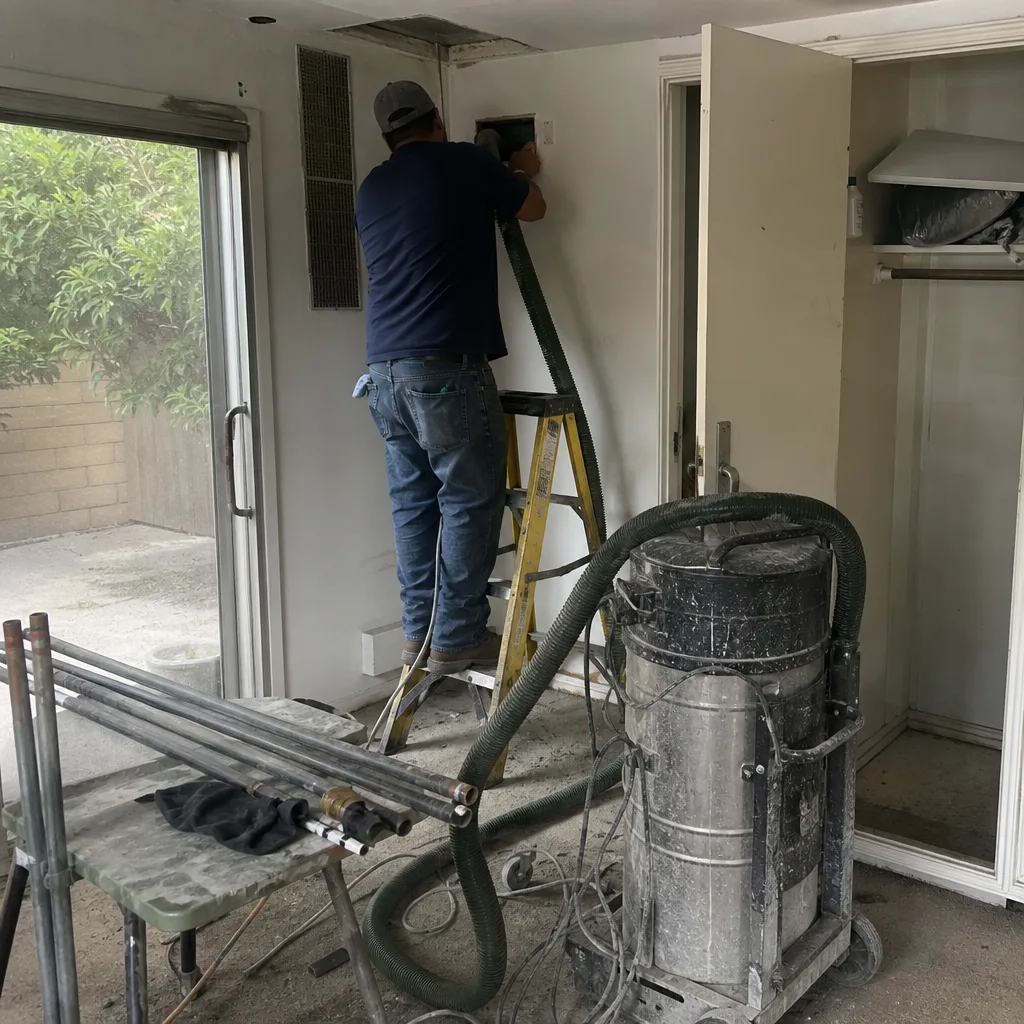 Before
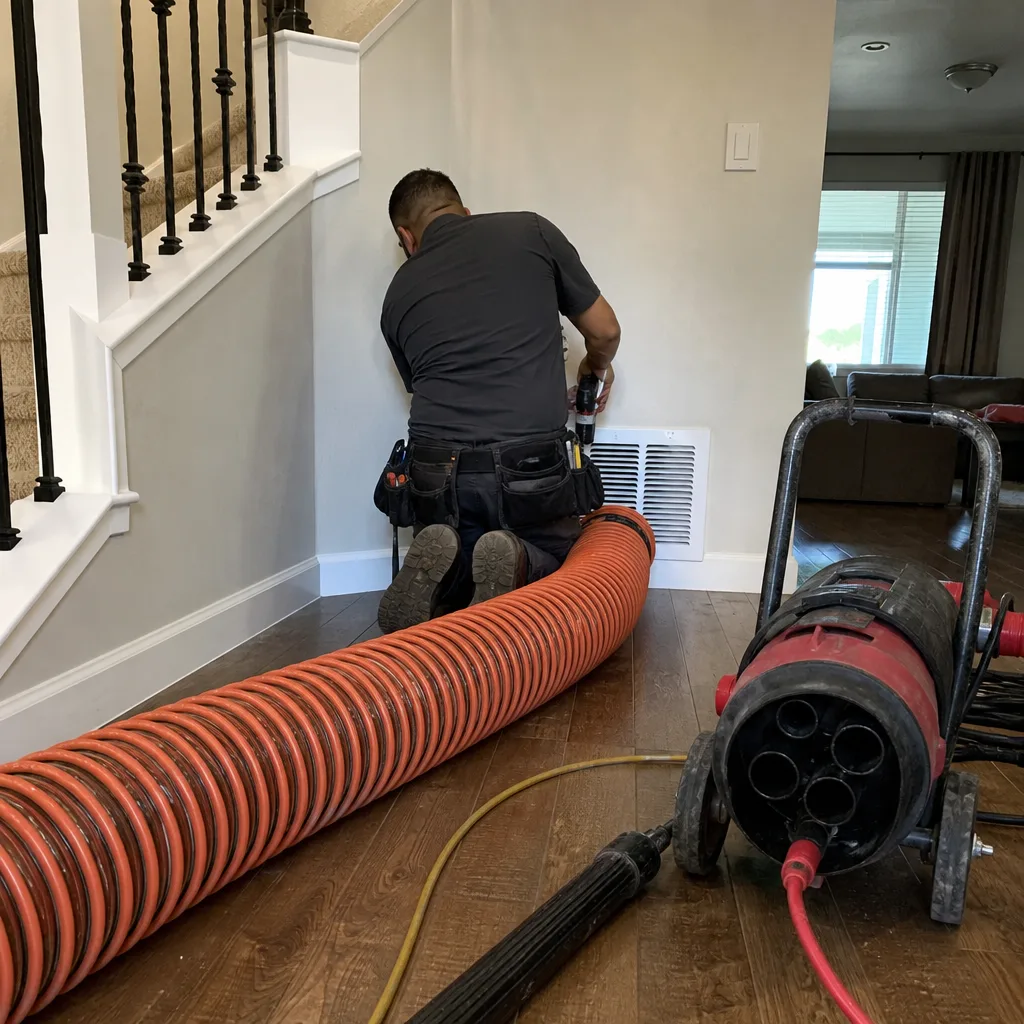 After
After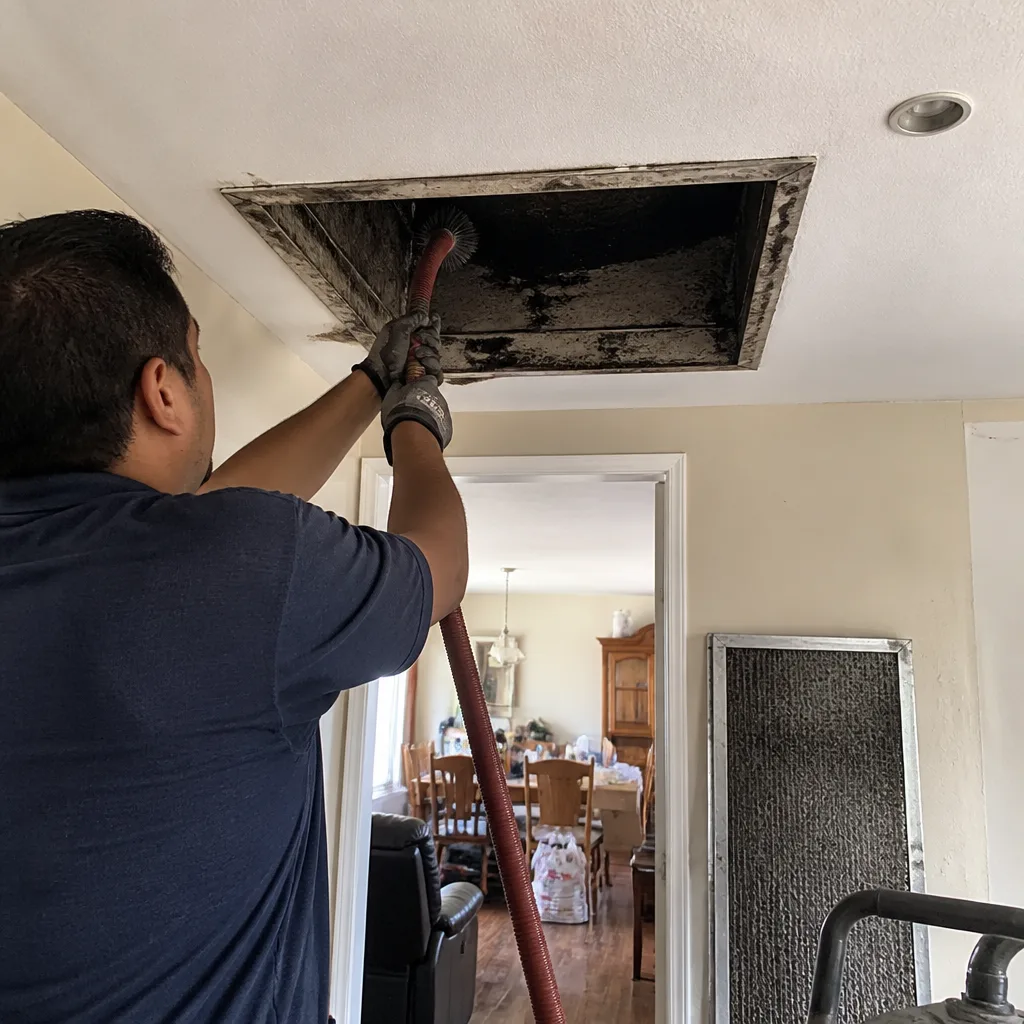 Before
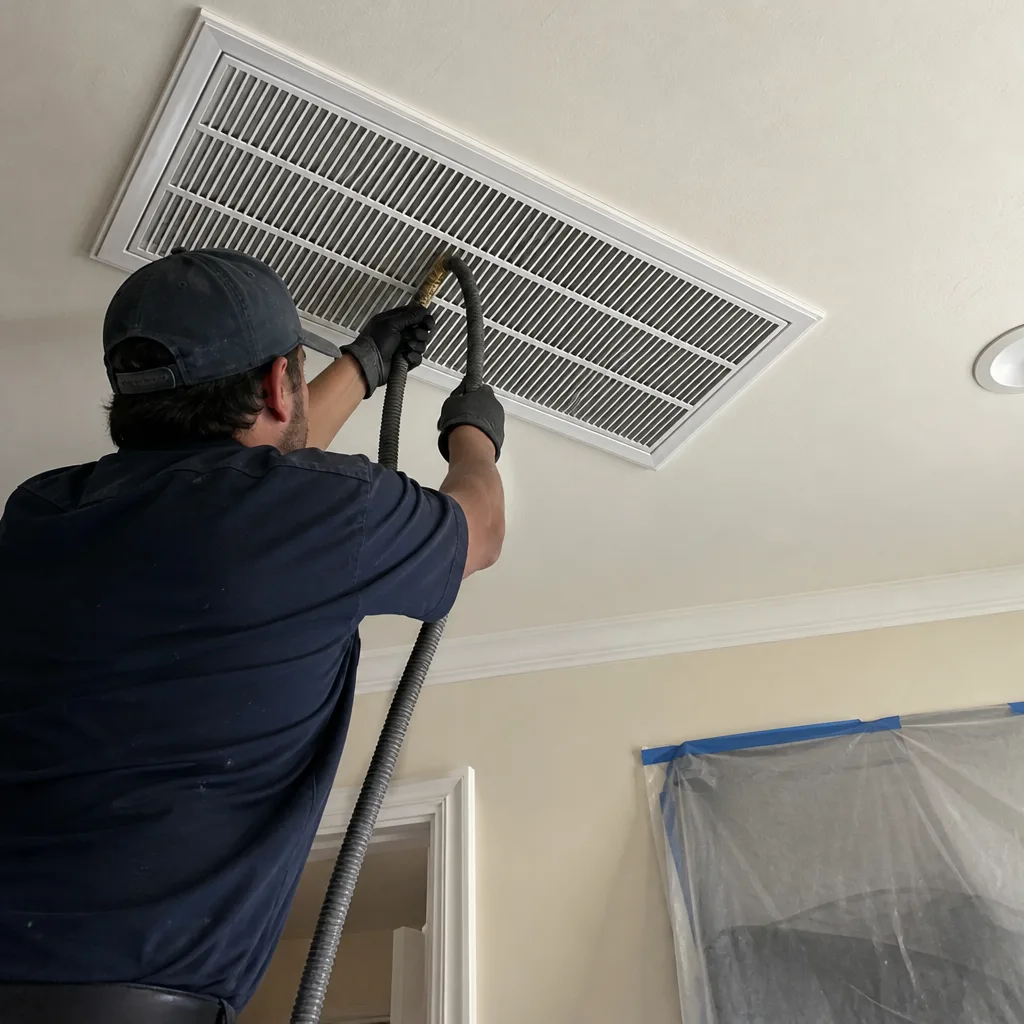 After
After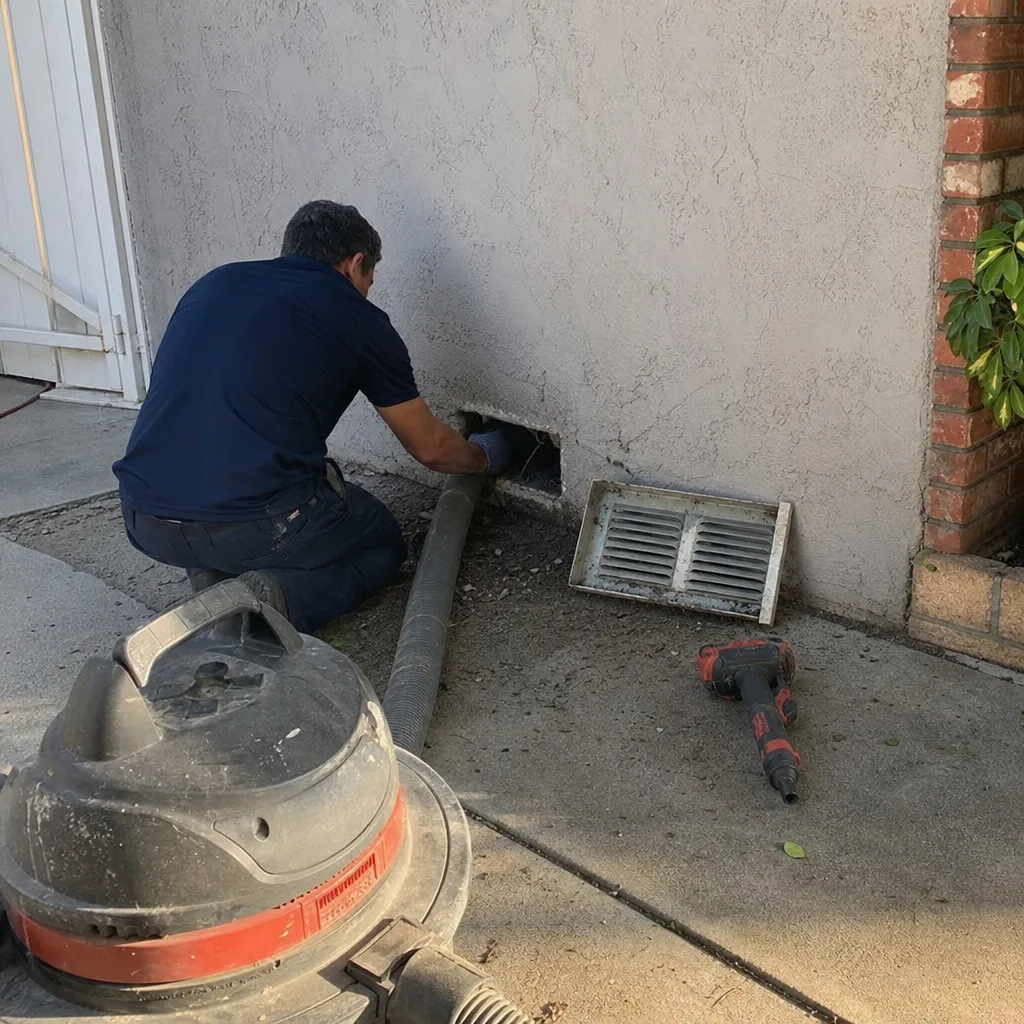 Before
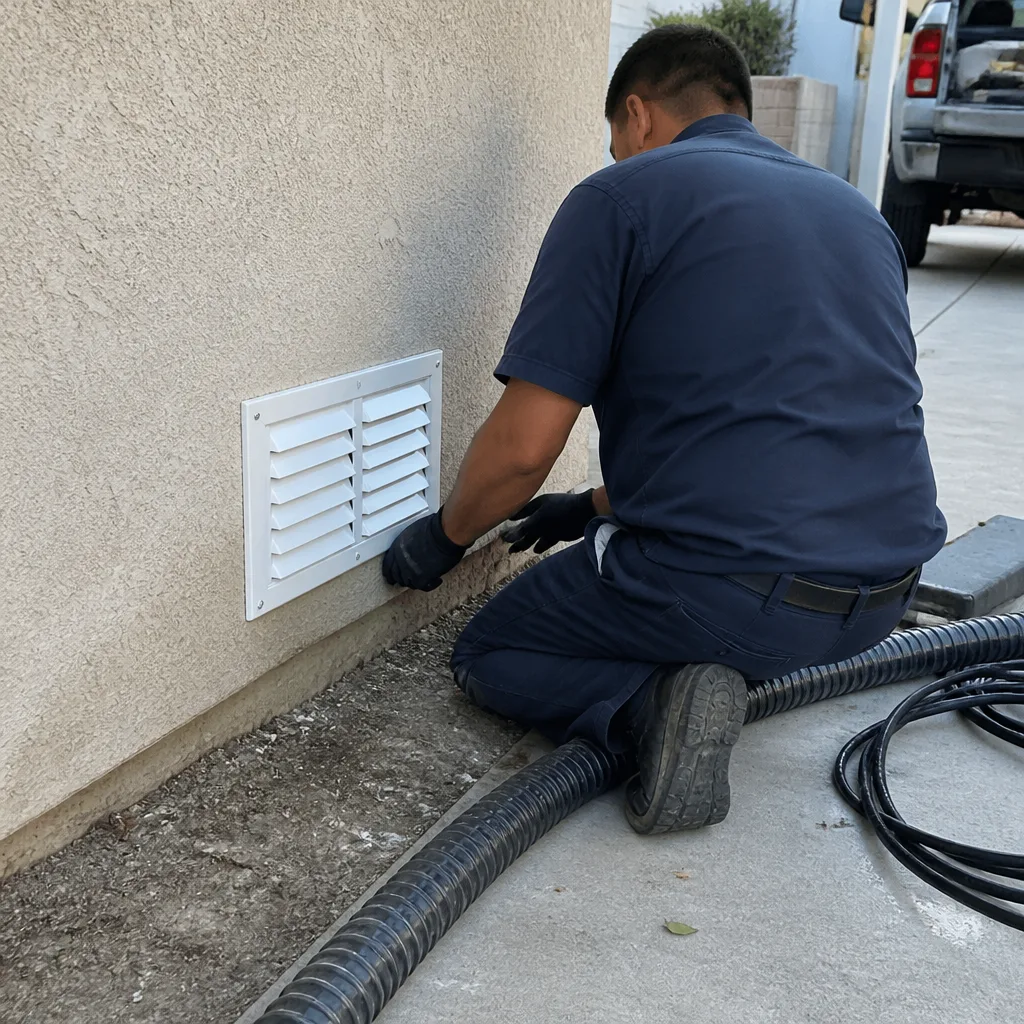 After
AfterWhen to Call a Professional
Call our Air Duct Cleaning services when the job requires negative pressure, which is every scenario behind the wall. That list is specific: visible mold or persistent musty odor, post-wildfire smoke exposure, rodent evidence, a system untouched for a decade, unexplained dust despite religious filter changes, or a dryer vent longer than 8 feet with turns. If any of those apply to your Woodland Hills home, the tools required are not on a Home Depot shelf, and the person operating them should know what they are doing and be able to prove the work with photos. Cardinal Air Duct Woodland Hills offers free estimates in Woodland Hills, and a live person answers the phone when you call. Call (559) 295-5878.
Frequently Asked Questions
You can clean the visible register openings and the first several inches of each branch duct, but a shop vac cannot reach the main trunk line or the deep portions of branch runs, and it lacks the CFM output to pull loosened material out of the system. What you do reach gets made airborne instead of captured, which is why most DIY duct cleaning results in dust redistribution rather than removal.
For a typical Woodland Hills home between 2,000 and 3,000 square feet with one HVAC system, a full professional air duct cleaning with negative pressure equipment runs $300 to $500. Larger homes, dual systems, or jobs requiring smoke remediation or mold treatment run higher, and any quote significantly below $250 for a whole-system cleaning is a bait price. Call (559) 295-5878 for an exact quote; estimates are free, and the price you are quoted is the price on the invoice.
In Woodland Hills, yes, because of two local factors: our pollen load, which runs from February through June, and our smoke exposure from wildfire season, which pushes fine particulate through every home in the Valley. Homes here accumulate filter-clogging and duct-coating material faster than homes in coastal climates, which shortens the interval between cleanings.
Every three to five years for a typical home with good filter habits and no unusual sources of contamination. Homes with pets that shed heavily, recent renovation work, wildfire smoke exposure, or occupants with respiratory conditions may need cleaning more frequently. If a company tells you every year no matter what, they are selling a subscription, not a service.
Because this industry runs on the bait-and-switch model at the low end. A $49 or $99 advertised price gets a technician into the home, at which point the “discoveries” begin and the real price emerges. Legitimate negative-pressure cleaning with HEPA equipment costs money because the equipment costs money, the operator time costs money, and the documentation costs money. A written price before work starts, which our company provides on every job, eliminates the script. Call us at (559) 295-5878 and you will have a number in hand before anyone touches a duct.
Demand before-and-after photography of the duct interior. Any professional outfit will provide this; the ones that refuse are concealing something. Rotobrush systems, used correctly, allow camera access to the duct interior during and after cleaning, and our technicians photograph every section they clean. If a company cannot show you the inside of your own ducts after the job, you have no way to verify anything happened.
The Bottom Line
DIY duct cleaning has a legitimate place: short straight dryer vents, register maintenance, filter discipline, and the surface cosmetics of a clean-looking vent cover. Everything behind the wall requires negative pressure, which requires professional equipment, which requires a professional. The cost difference is real, but so is the result difference, and the result difference is provable with before-and-after photos of your own ducts. In Woodland Hills, with our pollen and smoke, the interval between professional cleanings is three to five years, and what you do between those visits is the maintenance routine described above. Do the easy stuff yourself, know the line where your equipment stops working, and call someone honest when you hit it. For more guides & resources, explore our blog.
Written by Omar Haddad, Owner at Cardinal Air Duct Woodland Hills, serving Woodland Hills since 2005.